SK hynix Tops KRW 100 Trillion in Quarterly Revenue as HBM4 Enters Mass Production
News Summary
SK hynix reported record third-quarter 2026 results on October 28 (Korea Standard Time), with quarterly revenue topping KRW 100 trillion for the first time. The memory chipmaker posted revenue of about KRW 104.6 trillion and operating profit of about KRW 83.3 trillion, an operating margin of roughly 80%, driven by surging demand for AI memory such as HBM and server DDR5. Management said HBM4 has entered full-scale mass production and that memory supply could stay tight through 2030.
The Headline Numbers
Revenue for the July–September quarter reached about KRW 104.6 trillion, up 32% from the previous quarter and up 328% from a year earlier. Operating profit came in at about KRW 83.3 trillion, up 38% quarter over quarter and 632% year over year. The operating margin was 80%, three percentage points higher than in the second quarter, and EBITDA was about KRW 87.7 trillion, an 84% margin.
Net income was about KRW 39.8 trillion, a 38% net margin. That is far below the second quarter, when net profit peaked at about KRW 93.9 trillion on a large one-off non-operating gain tied to the company's Kioxia investment. In the third quarter, non-operating items were a net expense of about KRW 32.6 trillion, including roughly KRW 11.6 trillion of foreign-exchange losses and KRW 22.9 trillion of investment valuation losses, which pulled pre-tax income down to about KRW 50.7 trillion. Some outlets report slightly different net income figures (for example, about KRW 39.5 trillion attributable to shareholders of the parent), so exact numbers should be checked against the company's official release.
Cumulative results for the first nine months of 2026 stood at roughly KRW 236.5 trillion in revenue and KRW 181.5 trillion in operating profit, according to Chinese-language financial media reports.
What Drove the Quarter
Demand from AI data centers continued to reshape the memory market. In DRAM, bit shipments rose about 10% from the previous quarter, while average selling prices climbed in the high-20% range. Shipments of server DDR5 grew by more than 40% versus the second quarter.
In NAND flash, bit shipments dipped slightly as the company shifted its mix toward higher-value products such as 321-layer TLC enterprise SSDs, which are used in AI servers. NAND average selling prices rose in the mid-20% range.
HBM4 Moves Into Volume Production
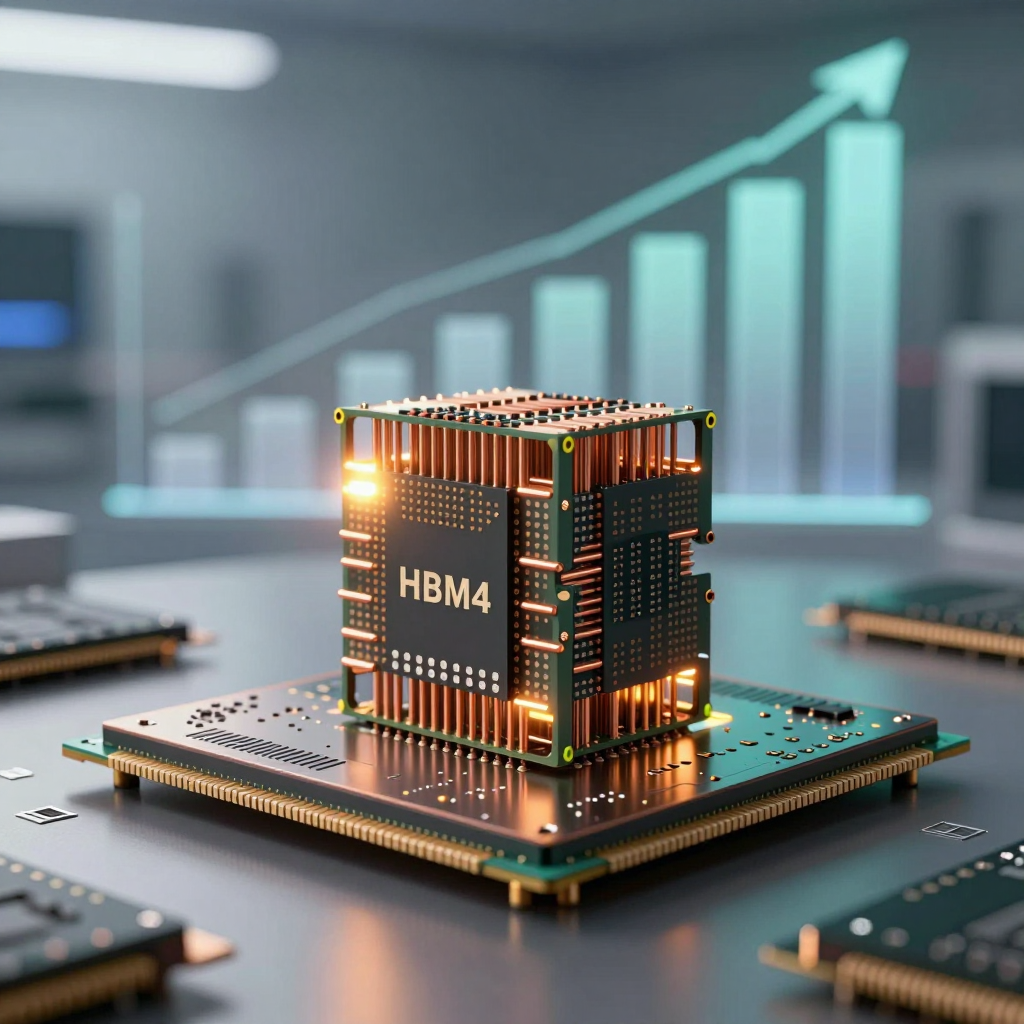
The most closely watched technical milestone was HBM4, the latest generation of high-bandwidth memory stacked next to AI accelerators. SK hynix said HBM4 entered full-scale mass production in the third quarter and that yields exceeded internal targets. Management expects HBM4 to overtake HBM3E in both shipment volume and revenue share in the fourth quarter. Sample shipments of the next step, HBM4E, were completed earlier in the year.
To support HBM4 output, the company plans to ramp its M15X fab to maximum capacity by the end of the year.
Outlook: Supply Locked In Through 2028
Looking ahead to the fourth quarter, SK hynix guided for DRAM bit shipments to rise in the mid-20% range and NAND bit shipments to grow by mid-single digits. For 2027, management expects DRAM demand growth in the mid-20% range and NAND in the high-teens, with revenue and profit significantly higher than in 2026.
Long-term supply agreements with 14 key customers already cover more than half of the company's 2027 and 2028 capacity. Management said that, combined with volumes under discussion, DRAM and HBM supply through 2029 is effectively sold out, and it expects the global memory shortage to persist until 2030. Capital spending in 2027 is expected to rise significantly from 2026 as the Yongin fab and the M17 facility ramp up in phases, though no specific figure was disclosed.
Balance Sheet and Shareholder Returns
Cash and cash equivalents rose to about KRW 114.5 trillion, up KRW 26.5 trillion from the prior quarter. Interest-bearing debt fell to about KRW 15.8 trillion, leaving net cash near KRW 98.7 trillion.
The company announced a quarterly dividend of KRW 20,000 per share, about KRW 14 trillion in total. It consists of KRW 10,000 from earnings and a KRW 10,000 special dividend funded by gains from the Kioxia investment. It also announced a KRW 20 trillion buyback, of which about KRW 10 trillion will be cancelled for shareholders and the rest used for employee and executive compensation. A separate KRW 40 trillion buyback announced in August was completed on October 21, about a month early.
For fiscal 2026, SK hynix is targeting roughly KRW 100 trillion in total shareholder returns, including at least KRW 30 trillion in dividends and at least KRW 60 trillion in buybacks and cancellations. The company also said it has discontinued the planned Solidigm IPO.
Market Reaction
In the US session that preceded the announcement, SK hynix's NASDAQ-listed shares (SKHY) closed at $145.36, up 1.92%. They then rose about 6% in after-hours trading to around $154, according to Investing.com. Shares also gained in Korean trading on October 28.
CEO Kwak Noh-Jung said the company has now delivered record results for six consecutive quarters, while CFO Kim Woo-hyun said the company has decided to pursue shareholder returns of about KRW 100 trillion through fiscal 2026.
Why It Matters
The results show how central memory has become to AI computing. Training and running large models depends on moving huge volumes of data quickly, which is why HBM, high-capacity DDR5 and fast enterprise SSDs are now among the scarcest components in the AI hardware supply chain. SK hynix's move to HBM4 volume production signals that the next generation of AI accelerators will have the memory bandwidth they need, while its multi-year supply agreements suggest that demand is expected to remain strong well beyond this year.
Note: Figures are as reported by news outlets from the company's earnings release and call. Dollar conversions vary by exchange rate, so the KRW figures are the more reliable basis.
This article was compiled by the AIBARS editorial team with AI assistance. AI can make mistakes, so please check the original source for anything important. Spotted an error? Email [email protected].