SpaceX Signs $40 Billion Apollo Lease Deal to Fund Nvidia Vera Rubin GPUs
News Summary
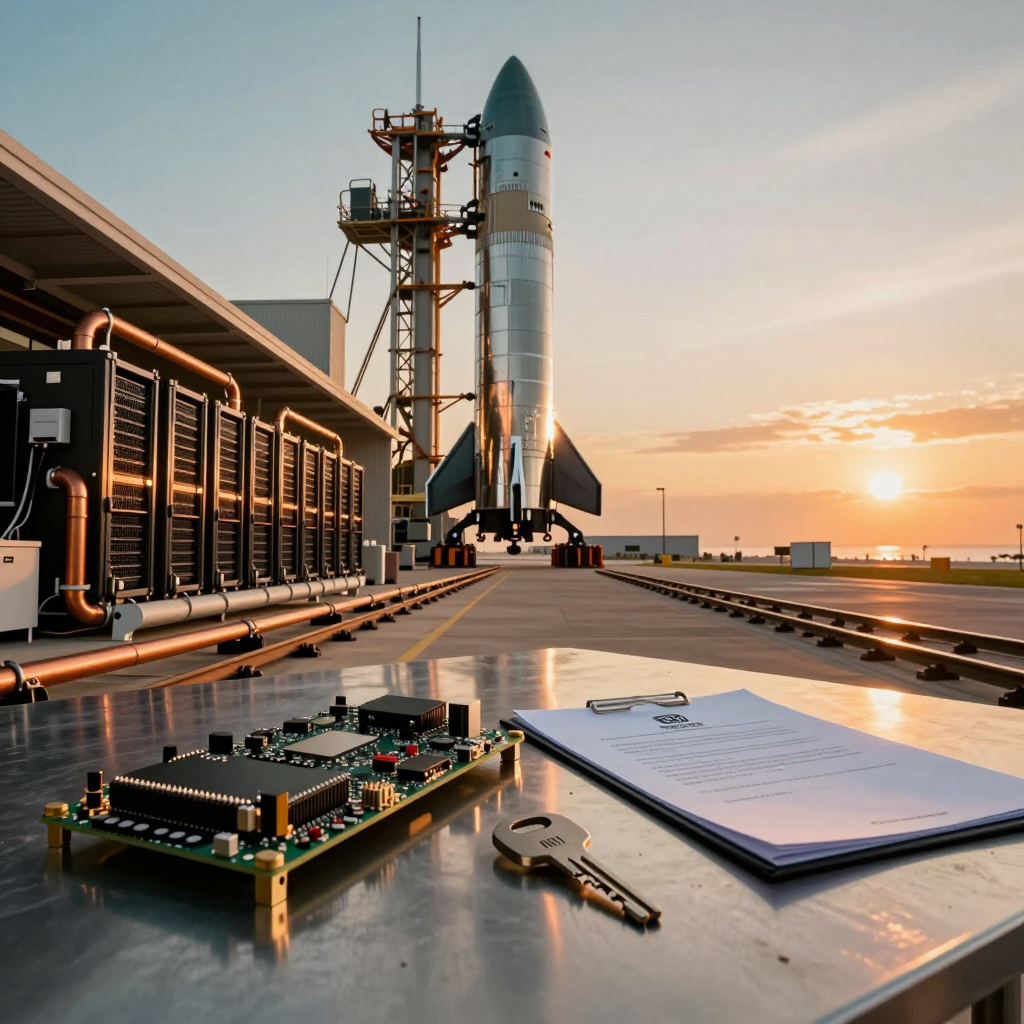
SpaceX has secured a binding commitment for roughly $40 billion in financing to acquire AI chips and related data center equipment, with an entity managed by Apollo Global Management buying the hardware and leasing it back to the company. The arrangement was disclosed in a regulatory filing on Monday, October 26, 2026, and reported by TechCrunch at 9:46 AM Pacific Time. Apollo described it as the largest committed GPU financing to date.
How the Deal Is Structured
Rather than borrowing money to buy chips outright, SpaceX will lease them. An Apollo-managed entity will purchase the GPUs and associated server hardware, then lease the equipment to SpaceX. Each lease runs roughly 5 to 5.25 years and begins when a given batch of equipment is delivered. The transaction is expected to close by the end of 2026, subject to customary closing conditions, with leases starting in the first half of 2027 as hardware arrives.
For readers new to the concept, this is a form of equipment financing: the owner of the hardware (here, a financing vehicle) is separate from the user, so the user pays over time instead of putting up a huge sum of cash on day one. It is commonly used for assets that are expensive and depreciate quickly, which describes cutting-edge AI accelerators well.
The Hardware: Nvidia Vera Rubin
Apollo said the financing will help deliver Nvidia's next-generation Vera Rubin chips for what it called SpaceX's "terrestrial compute buildout." The phrase distinguishes ground-based data centers from the space-based ideas often associated with the company. These accelerators are the type of processors used to train and run large AI models, and demand for them has outstripped supply across the industry.
What SpaceX Said
SpaceX's chief financial officer, Bret Johnsen, said the lease "diversifies our funding sources" and covers a notable share of the funding needed for the company's growth plans. He also said SpaceX sees "less than one-year payback periods" on its AI infrastructure investments, meaning the company expects the hardware to earn back its cost quickly. These figures are management claims and have not been independently verified.
Why the Company Needs So Much Capital
SpaceX's AI segment, which includes the Grok chatbot, the Cursor coding tool and cloud compute services, generated $7.6 billion of the company's $14.6 billion in third-quarter revenue. That is more than Starlink and launch services combined, and it beat investor expectations. At the same time, capital expenditures climbed to nearly $20 billion, up from $6.9 billion a year earlier. On its October 20 earnings call, the company said it expects $35 billion to $40 billion in spending in the fourth quarter alone.
Earlier Reports of the Plan
The deal follows reports in early October 2026, attributed to the Financial Times and relayed by Reuters, that SpaceX was seeking about $40 billion to fund an Nvidia chip order. Those reports described a package of roughly $10 billion in bank loans and $30 billion in investment-grade debt, with Pimco expected to help place the debt. The final announced structure, a lease from an Apollo-managed entity, differs from that debt-focused description, so the earlier details should be treated as preliminary. Apollo has also previously financed Nvidia GPU clusters leased to xAI, which is now part of SpaceX, and is one of several firms in Nvidia's August 2026 partnership on financing platforms aimed at more than $500 billion of AI infrastructure.
Context: Financing the AI Build-Out
The deal arrives after a turbulent stretch in debt markets for AI infrastructure companies, as investors weigh heavy capital spending against limited profits. Elon Musk pointed to SpaceX's investment-grade status and the steady cash flow from Starlink and launches as advantages. On Sunday, October 25, he argued that debt markets have largely closed to companies without major non-AI revenue, and predicted heavy losses and consolidation among the more than 200 "neocloud" companies that rent out GPUs, with only a few expected to survive. This is an opinion, not an established outcome.
What to Watch
Key points to follow include whether the deal closes by year-end as expected, how quickly Vera Rubin hardware is delivered in the first half of 2027, and whether leasing becomes a standard way for large AI builders to fund compute. The speed at which the hardware pays for itself will be the real test of the one-year payback claim.
This article was compiled by the AIBARS editorial team with AI assistance. AI can make mistakes, so please check the original source for anything important. Spotted an error? Email [email protected].