AI-Designed Chips in a Week: Ricursive's Plan for a 10,000x Compute Surge
News Summary
Ricursive Intelligence, a startup founded by two of the researchers behind Google's AlphaChip, is making the case that artificial intelligence should design the chips that run artificial intelligence. At TechCrunch Disrupt on Wednesday, October 14, 2026 (dates in this report follow US Pacific Time; no clock times were published), co-founder and CEO Anna Goldie argued that AI-driven chip design is one of the few realistic ways to keep pace with soaring demand for computing power.
The Compute Problem
Goldie told the audience that demand for compute could grow by at least 10,000 times within five years. In her view, the industry cannot respond simply by building 10,000 times more data centers. Instead, chips themselves must become far more efficient in how they use bandwidth, silicon wafers and fabrication capacity. That framing positions chip design, rather than raw construction of facilities, as a key lever for the next stage of AI growth.
What Ricursive Is Building
Ricursive Intelligence is developing AI systems that design chips, learn from every design iteration, and use that experience to improve later designs. The aim is to automate and speed up a process that has traditionally relied on large teams of specialist engineers. The company's co-founders are Anna Goldie (CEO) and Azalia Mirhoseini (CTO), both former Google researchers who played central roles in AlphaChip, an AI system used internally to optimize floorplanning and layout across several generations of Google's Tensor Processing Units.
Lessons From AlphaChip
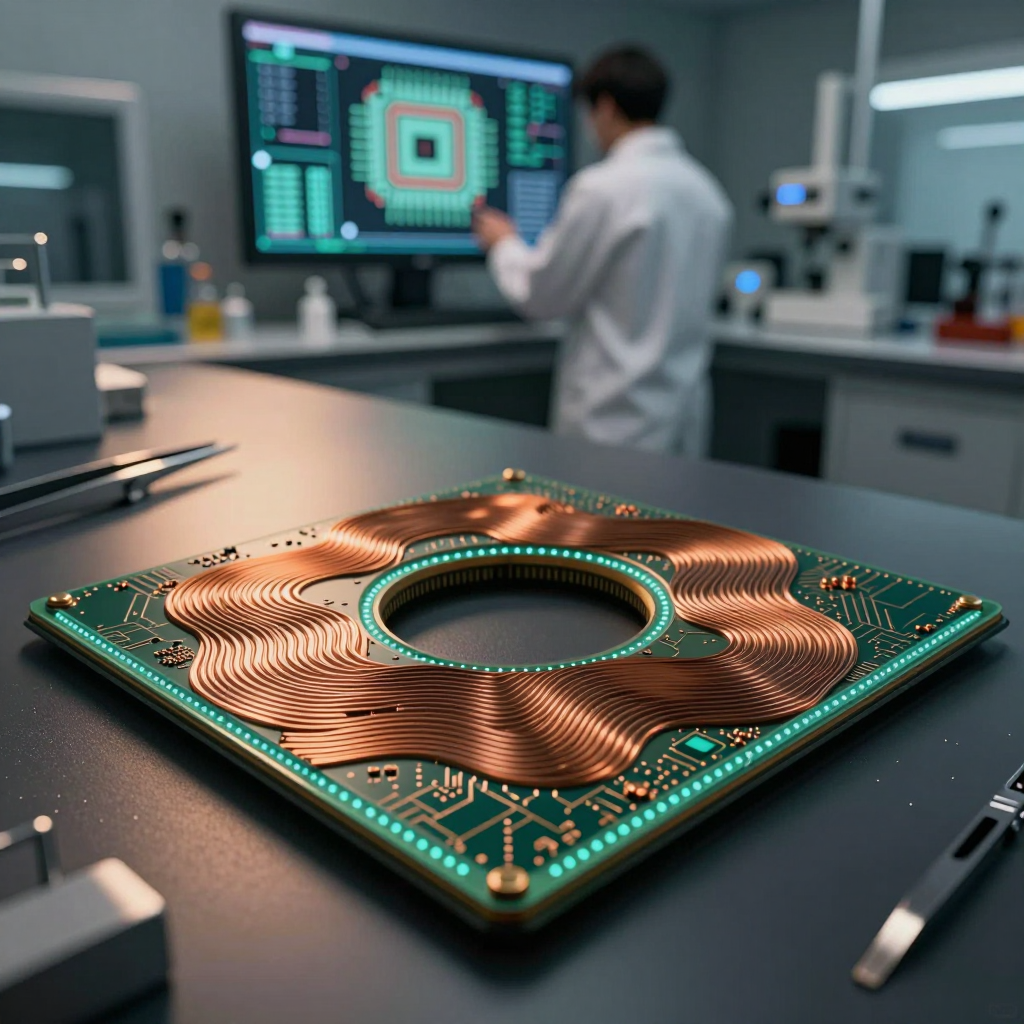
Goldie recalled that AlphaChip once produced a circular, "donut-shaped" layout. Engineers were initially surprised by the unusual result, yet it proved successful. Ricursive extends that idea. Rather than splitting a processor into dozens of smaller blocks and optimizing each separately, it optimizes the entire chip at once. That freedom allows the AI to propose unconventional designs, including wave-like patterns. The founders say they plan to share more detail about those designs at a later date.
Faster Design, More Custom Chips
Designing a chip today typically takes between six months and two years, which forces companies to be extremely selective about which chips they build. Goldie said an AI-designed chip could take roughly a week. If that holds, custom silicon for niche or emerging areas such as space systems, augmented reality, virtual reality and biological computing could become financially viable, and those chips could also be more energy efficient. She described the division of labor she envisions this way: humans bring ideas and creativity, and execution is handled by AI.
Funding and Backing
Ricursive launched with a $35 million seed round at a reported $750 million valuation, with Sequoia Capital reported as the lead (one report also names Striker Venture Partners as co-lead). On January 26, 2026, less than two months after launch, it announced a $300 million Series A at a $4 billion valuation, led by Lightspeed Venture Partners. Participants reported include DST Global, NVentures (Nvidia's venture arm), Felicis, 49 Palms, Radical AI and Sequoia. Total funding is reported at about $335 million. Reports indicate the company had fewer than 10 employees at the time of the Series A, and that the money is earmarked for growing the team and significantly expanding compute infrastructure.
Why It Matters
AI chip design is a feedback loop: better chips train more capable AI, which in turn can design better chips. If Ricursive's approach works at commercial scale, it could shorten development cycles and lower the barrier to specialized hardware. Important questions remain. The company has not disclosed customers, commercial products, revenue or timelines for its wave-like designs, and the 10,000x demand figure is a projection from the CEO rather than an independently verified forecast. Reported details such as funding dates and round leads vary slightly across outlets, so readers should treat them as reported figures.
Sources
Coverage drew on TechCrunch (October 14, 2026), Data Center Dynamics, Converge Digest, AI Business, VKTR and Let's Data Science.
This article was compiled by the AIBARS editorial team with AI assistance. AI can make mistakes, so please check the original source for anything important. Spotted an error? Email [email protected].