Anthropic's $2 Trillion IPO Plan Hands Board Control to Outside Trustees, Not Shareholders
News Summary
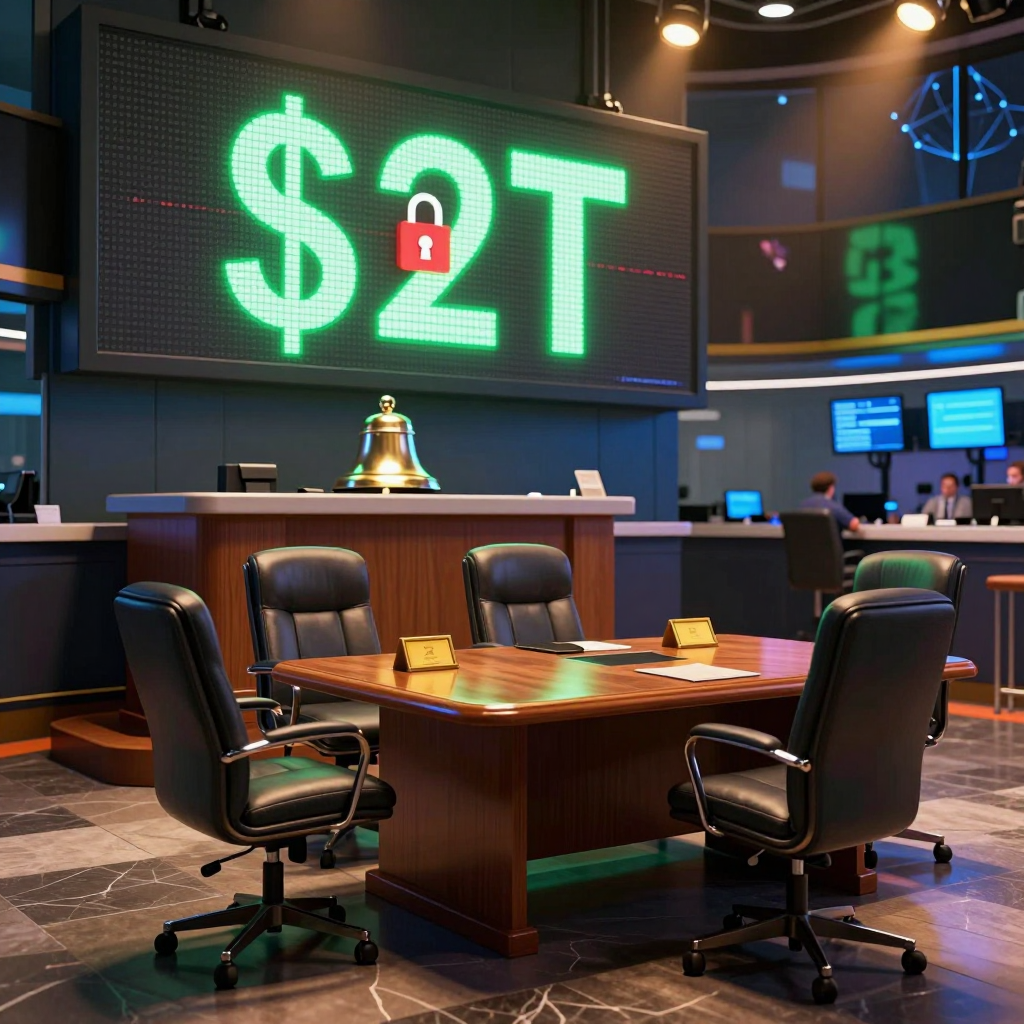
Anthropic, the maker of the Claude family of AI models, is moving toward what could become one of the largest technology listings in history, with bankers and investors reportedly discussing a public valuation approaching $2 trillion. As the company prepares its paperwork, attention has shifted away from the headline number and toward an unusual governance arrangement that could leave ordinary shareholders with less control over the company than they might expect from a typical Nasdaq debut.
A Confidential Filing and an Ambitious Timeline
Anthropic reportedly filed confidentially for an initial public offering with the U.S. Securities and Exchange Commission in early June 2026, targeting a listing on Nasdaq as soon as October 2026, Eastern Time. Multiple reports indicate that Goldman Sachs, JPMorgan, and Morgan Stanley are expected to lead the offering, with early estimates suggesting the deal could raise more than $60 billion for the company. Because the filing remains confidential while under initial SEC review, the full S-1 registration statement — including detailed financials — has not yet been made public.
The scale of the potential listing reflects Anthropic's rapid revenue growth. The company's annualized revenue run rate reportedly rose from roughly $47 billion in May 2026 to more than $65 billion by the end of July 2026, Eastern Time, after a Series H-1 funding round in May 2026 valued the company at $965 billion. Bankers discussing a $2 trillion listing valuation have reportedly pointed to internal projections of $190 billion to $200 billion in revenue by 2028 as the basis for that figure.
The Long-Term Benefit Trust
At the center of the governance discussion is Anthropic's Long-Term Benefit Trust (LTBT), an independent oversight body created when the company was founded as a public benefit corporation. The Trust is made up of trustees with backgrounds in fields such as AI safety, national security, public policy, and social enterprise, rather than backgrounds in finance or shareholder representation.
As of mid-2026, the Trust's membership included Neil Buddy Shah, Richard Fontaine — a national security specialist appointed earlier in the year — and Mariano-Florentino Cuéllar, later joined by former Federal Reserve Chair Ben Bernanke, who was appointed in July 2026, Eastern Time. Some later reports describe the Trust operating with three members after a membership change, illustrating that its exact composition has continued to shift even as its powers have drawn increasing scrutiny ahead of the listing.
Trustees hold a special class of stock, often referred to as Class T shares, that carries no economic rights. Trustees receive no dividends and no capital appreciation from Anthropic's performance, and by design have no financial stake in the company at all. Their sole function is governance: the Trust has the authority to elect and, in some circumstances, remove members of Anthropic's board of directors, with that authority designed to grow over time until the Trust can appoint a majority of the board.
Founders Retain Outsized Voting Power
Alongside the Trust's board authority, reports indicate Anthropic is preparing to issue a separate class of supervoting shares to chief executive Dario Amodei and his co-founders ahead of the IPO. Amodei reportedly holds only about a 2% economic stake in the company himself, and the founding team collectively holds less than 5% of outstanding shares. A dual-class structure of this kind would nonetheless give the founders voting power well beyond their ownership stake, a pattern comparable to structures used by other technology leaders when their companies went public.
Taken together, industry observers say the arrangement means investors buying shares in the IPO would be purchasing an economic interest in Anthropic without gaining proportional influence over its board or strategic direction. That combination — founder supervoting shares plus a non-shareholder trust with growing board authority — is described by governance researchers as unprecedented for a company of this size going public in the technology sector.
Why Anthropic Built the Trust This Way
Anthropic has described the Trust's purpose as helping ensure the company remains focused on the long-term, safe development of advanced AI systems even as commercial pressures intensify after going public. As a public benefit corporation, Anthropic is legally required to balance shareholder returns with a stated public-benefit mission, and company statements have framed the Trust as a mechanism to protect that mission from short-term market pressure.
Supporters of the structure argue it insulates long-horizon safety decisions from quarterly earnings pressure and could appeal to mission-oriented institutional investors, including some sovereign wealth funds, university endowments, and pension funds that weigh environmental, social, and governance criteria heavily. These investors may view a durable, independent governance body as a feature rather than a risk when deciding whether to participate in the offering.
How Investors and Governance Groups Are Reacting
The response from traditional governance watchdogs has been more skeptical. Organizations that track shareholder rights, including groups similar to the Council of Institutional Investors, have historically flagged dual-class share structures without a defined sunset period as a governance concern, and proxy advisory firms have in the past recommended votes against directors at newly public companies with unequal voting rights that lack a time-based expiration.
Analysts covering the potential offering describe the Trust as likely to be one of the most debated elements of the eventual public filing. Some institutional investors may treat the arrangement as a "control discount," pricing in some caution because public shareholders will not hold effective board control even after the company lists. Others may treat the same structure as a "durability premium," reasoning that a company explicitly built to prioritize careful, safety-conscious scaling of AI systems is worth a premium precisely because it is shielded from short-term shareholder pressure to cut corners.
What Comes Next
With the filing still confidential as of early September 2026, Eastern Time, the public will not see Anthropic's full financial disclosures or the precise legal language governing the Trust's authority until the company either confirms a listing date or the SEC review process concludes. Until then, the $2 trillion figure being discussed by bankers remains a market estimate rather than a confirmed offering price, and the final shape of the Trust's governance powers — including its exact membership and the pace at which its board authority grows — is likely to remain a central topic of discussion among prospective investors, researchers studying AI governance, and the broader technology industry as the listing approaches.