SpaceX's AI Spending Spree: Inside the $15.8 Billion Quarter Behind Colossus II
News Summary
SpaceX disclosed on August 4, 2026 that its artificial intelligence build-out consumed $15.8 billion in capital spending during the second quarter, part of a broader $18.4 billion capex total reported in the company's first earnings statement since becoming a publicly reporting company. The figure, released after markets closed at 4:30 p.m. Eastern Time, marked a sharp jump from the $10.1 billion spent on AI infrastructure in the first quarter and pushed first-half AI capex to roughly $23.6 billion.
A First Public Look at the Numbers
Revenue for the quarter reached $7.8 billion, a 92% increase from a year earlier and about $1 billion above Wall Street expectations. The AI segment, which sells cloud compute and machine learning services built on top of SpaceX's satellite and data center infrastructure, posted revenue of $2.6 billion, up 247% year over year. Executives said the growth was driven in part by $14.1 billion in new cloud service agreements signed during the quarter, including $1.6 billion in bookings added in the final weeks of the reporting period.
Despite the revenue beat, investors focused on the scale of spending required to keep pace with demand. Shares fell as much as 8% in after-hours trading once the capital expenditure figures became clear, with the AI segment itself reporting an operating loss of roughly $1.26 billion for the quarter as new compute capacity came online faster than it could be monetized.
Where the Money Is Going
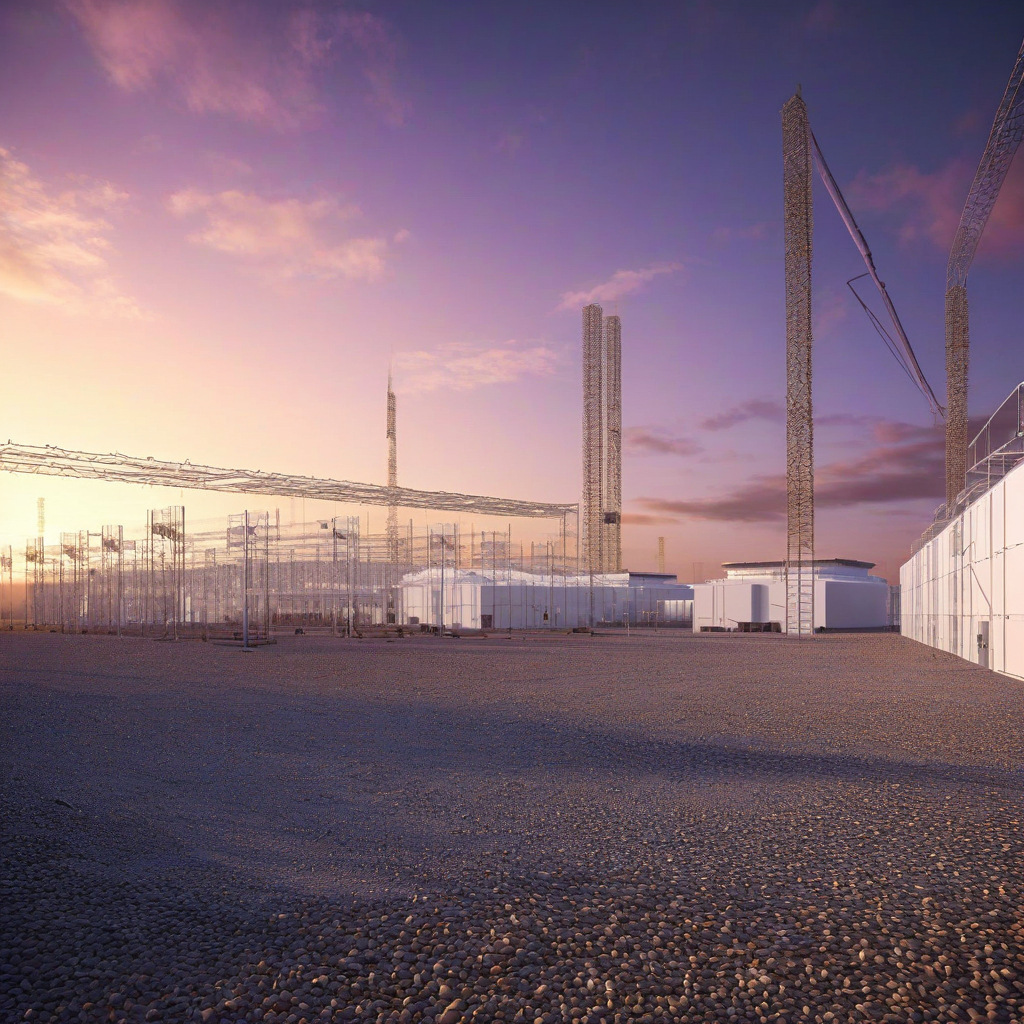
Company leadership said the bulk of the AI capital spending is funding construction of Colossus II, the next phase of SpaceX's large-scale compute cluster, alongside additional data center capacity to support both internal engineering workloads and external cloud customers. On the earnings call, which began at 5:00 p.m. Eastern Time, the company said its data centers are being built exclusively around Nvidia accelerators, continuing a supplier relationship established during the first phase of the Colossus buildout.
Management indicated the company expects to exit 2026 with more than 2 gigawatts of installed compute capacity, with plans to expand toward nearly 10 gigawatts by the end of 2027. That trajectory implies capital spending will likely remain elevated through at least the next several quarters as new facilities are constructed and equipped.
Market and Analyst Reaction
Analysts who had modeled roughly $13.2 billion in quarterly capital expenditure were caught off guard by the actual $18.4 billion figure, which annualizes to a run rate near $73.5 billion, well above the roughly $48.7 billion in full-year capex that had been broadly expected heading into the report. Several research notes published after the call described the spending pace as aggressive even by the standards of other large-scale AI infrastructure buildouts currently underway across the technology sector.
Company leadership defended the spending as necessary to capture long-term demand for AI compute, telling shareholders during the call that the broader business, spanning launch services, satellite communications, and AI infrastructure, could plausibly reach $1 trillion in annual revenue over the coming years if current growth trends hold. That framing did little to fully offset near-term investor concern about the widening gap between AI segment revenue and the capital required to generate it.
What Comes Next
With first-half AI capital spending already near $23.6 billion, market attention now turns to how quickly the new compute capacity can be converted into paying cloud contracts. The company has signaled it will continue reporting AI segment performance as a distinct line item in future earnings disclosures, giving investors and industry observers a clearer view into how the economics of large-scale AI infrastructure evolve as capacity comes online through the remainder of 2026 and into 2027.