Anthropic Locks In $10 Billion Norway Compute Deal With Nvidia-Backed Volta
News Summary
Anthropic has signed a six-year, roughly $10 billion computing capacity agreement with Volta Infra Holdings, a newly formed cloud infrastructure startup backed by Nvidia, according to a report from Bloomberg published August 4, 2026 (Eastern Time). The deal secures dedicated access to a purpose-built data center in Norway equipped with Nvidia's latest-generation Vera Rubin chip systems, marking one of the largest single compute procurement agreements disclosed by an AI lab this year and underscoring how fast frontier AI companies are moving to lock in long-term chip capacity.
The Deal Structure
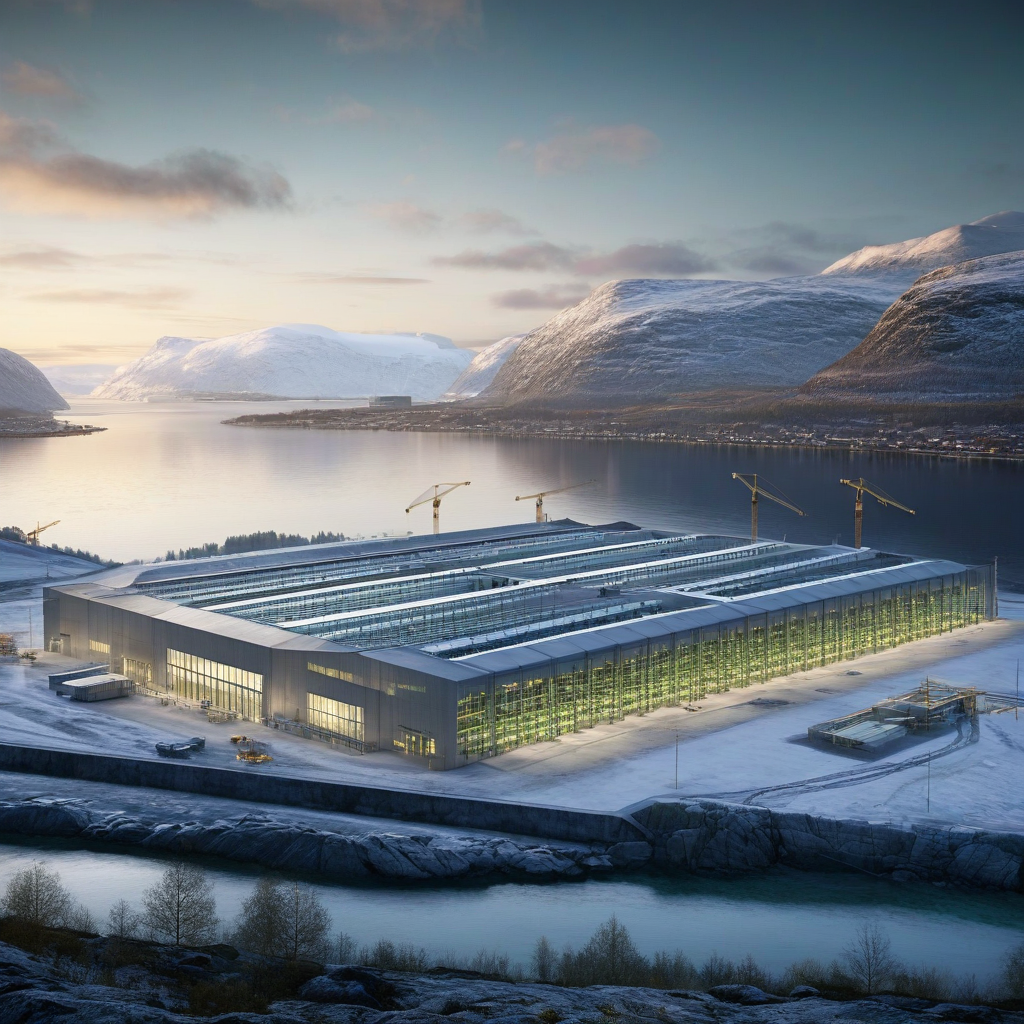
Under the agreement, Volta will build out and operate a dedicated data center campus for Anthropic's use, with the facility located at the Tydal site in Norway that is owned and operated by Bitdeer Technologies, a company historically known for Bitcoin mining infrastructure. The site carries a total capacity of 133 megawatts and will be outfitted entirely with Nvidia's next-generation Vera Rubin systems, positioning Anthropic among the first AI labs to gain large-scale access to that hardware generation.
Volta itself is a young company; reports note that the startup had only been publicly known for about a week before the agreement with Anthropic was disclosed, reflecting the rapid pace at which specialized compute providers are being formed and funded to meet AI lab demand. Volta had not previously named its customer, describing it only as a "leading AI laboratory," before Bloomberg's sources confirmed the counterparty as Anthropic.
Renewable Power and Delivery Timeline
A distinguishing feature of the agreement is its power source: the Norway facility will run entirely on renewable hydroelectric power, aligning with a broader trend among AI infrastructure developers to site new data centers in regions with abundant clean energy in order to manage both operating costs and sustainability commitments. Norway's extensive hydropower base has made it an increasingly attractive location for energy-intensive computing projects.
Delivery of the contracted capacity is expected to be phased. Bitdeer, which separately signed a 16-year colocation lease with Volta valued at approximately $4.7 billion in initial contracted revenue, said it plans to hand over capacity across four data halls in two phases, with the first phase targeted for completion by the end of 2026 and the second phase set for the first quarter of 2027. Bitdeer's agreement also includes an eight-year extension option that could raise the total potential contract value to as much as $8 billion over 24 years.
Part of a Broader Compute Buildout
The Volta agreement is the latest in a series of major infrastructure commitments Anthropic has made in 2026 as it races to secure sufficient computing power to train and serve its Claude family of AI models. Earlier this year, Anthropic entered a wide-ranging partnership involving Microsoft Azure and Nvidia, under which Nvidia and Microsoft agreed to invest up to $10 billion and $5 billion respectively in Anthropic, while Anthropic committed to a $30 billion compute purchase on Microsoft Azure and contracted for an additional gigawatt of capacity. That arrangement made Anthropic's Claude models available across all three major cloud providers — Microsoft, Amazon, and Google.
Separately, media reports in the same period indicated Anthropic was in early-stage talks with Meta Platforms over a potential deal worth up to $10 billion for leased compute capacity over two years, though those discussions had not yet resulted in a signed agreement at the time of the Volta announcement.
Why It Matters
Industry analysts say the scale and frequency of these compute deals illustrate the intensity of the global race among AI developers to secure chip capacity as demand for training and running large language models continues to outstrip available supply. For students and technology observers, the Volta agreement offers a clear example of how modern AI development depends not just on algorithms and research talent, but on massive, capital-intensive physical infrastructure — data centers, specialized chips, and power grids — built and financed through complex, multi-party partnerships spanning chipmakers, cloud operators, and energy providers around the world.