Anthropic Confirms In-House Chip Team to Power Next-Generation Claude Models
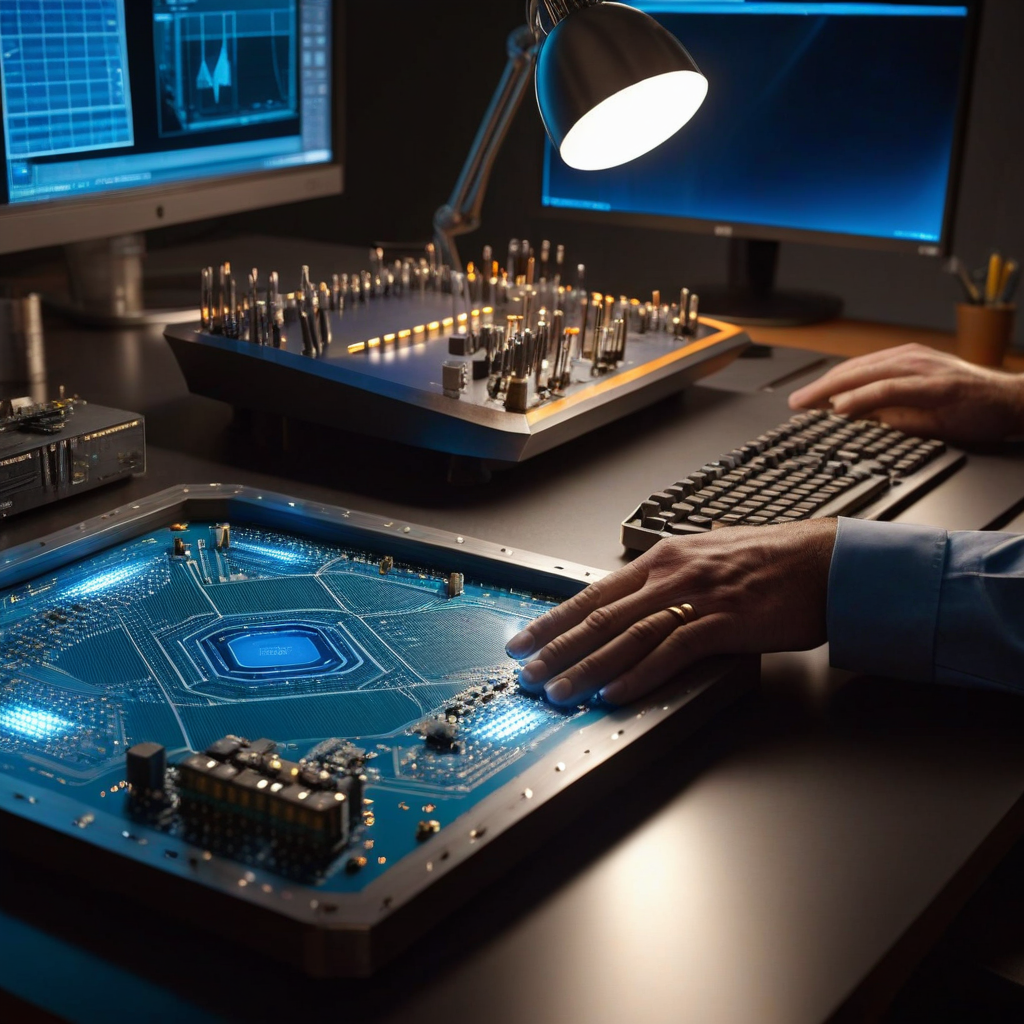
News Summary
Anthropic confirmed on August 5, 2026, that it is assembling an in-house team to design custom AI chips for its Claude models, marking the company's first public acknowledgment of a move toward proprietary silicon. The announcement, first surfaced through a job listing and reported by Business Insider before being confirmed to TechCrunch, signals a shift toward tighter hardware-software co-design as demand for Claude's computing capacity continues to climb.
What Anthropic Announced
Anthropic is recruiting engineers with cross-stack experience — spanning chip architecture, hardware engineering, and machine learning systems — to join what the company is internally calling its "custom silicon team." According to reporting on the compensation package, some senior chip engineering roles carry annual salaries of up to $485,000, reflecting the intensity of competition for hardware talent across the AI industry. The goal, per the company, is to co-design chips and models together so that Claude can run faster and more efficiently at the scale its enterprise and consumer customers require.
A Multi-Chip Strategy, Not a Replacement
Anthropic was careful to frame the initiative as additive rather than a departure from its existing infrastructure partnerships. The company said it will continue relying on a diversified hardware stack that includes processors and cloud infrastructure from Amazon Web Services, Google, Nvidia, and AMD. Custom silicon is described as the next layer in that multi-chip approach rather than a replacement for it. Notably, Anthropic has a long-term agreement with Google and Broadcom that gives it access to roughly 3.5 gigawatts of custom TPU capacity beginning in 2027, underscoring how deeply the company's compute strategy is already intertwined with established chipmakers.
Manufacturing Partner Talks
Reporting from July 2026 indicated that Anthropic had been in discussions with Samsung as a potential manufacturing partner for its prospective custom chips. Anthropic has not disclosed a public timeline for when any in-house designed chip might reach production, nor has it confirmed whether it would manufacture the hardware itself or contract the work to an external foundry.
Industry Context
The move places Anthropic alongside a growing list of AI developers pursuing custom silicon to reduce reliance on general-purpose accelerators and to tailor hardware directly to their own model architectures. OpenAI unveiled a Broadcom-built chip known as Jalapeño in June 2026, purpose-built for inference workloads. Google DeepMind has long used Alphabet's proprietary TPU chips to run its models, and Meta has been developing its own MTIA accelerators for AI applications. Industry observers note that as demand for advanced AI systems accelerates, leading labs are increasingly treating chip design as a core competitive capability rather than something to outsource entirely.
Why It Matters
For everyday users and businesses relying on Claude, deeper hardware-model co-design could eventually translate into faster response times and lower operating costs, benefits that typically get passed along through improved product performance and pricing. For the broader technology sector, Anthropic's move is another sign that the race to build advanced AI is increasingly a race to control computing infrastructure from the silicon up, not just to build better software models.