SpaceX's AI Arm Now Drives 52% of Income as Q3 Revenue Hits $14.6 Billion
News Summary
SpaceX reported third-quarter 2026 results on Tuesday, October 20, 2026 (Eastern Time), in a regulatory filing, and the numbers point to an AI business that is growing faster and earning more than investors had anticipated. According to TechCrunch, the company's data centers and Grok agents beat expectations for profitability, and AI now accounts for 52% of SpaceX's income. Total revenue reached $14.6 billion, and net income came in at $4.4 billion, compared with a $1 billion loss in the same quarter a year earlier.
The Quarter in Numbers
Revenue for the quarter was $14.6 billion. Net income of $4.4 billion marks a sharp turnaround from the $1 billion loss recorded in the third quarter of 2025. Even so, the company's net loss for the first nine months of 2026 stands at $413 million, so it still has ground to make up before it is profitable for the full year.
TechCrunch notes that about $1 billion of the quarter's revenue came from a recovery in Bitcoin prices and from unspecified related-party income, which may be tied to a SpaceX investment in another company. That is worth keeping in mind when comparing the headline figure with underlying operating performance.
Capital expenditures totaled $19.6 billion in the quarter. Chief Financial Officer Bret Johnsen said fourth-quarter capital investment is expected to be between $35 billion and $40 billion, nearly double the third-quarter level. He also forecast first-quarter 2027 revenue of $33 billion to $37 billion.
The Super Intelligence Segment
SpaceX has renamed its AI business line the Super Intelligence segment. In the third quarter it generated $7.5 billion in revenue from three sources: the recently acquired Cursor coding tool, the Grok chatbot, and its neocloud business, which rents computing capacity to outside customers. The neocloud operation now has 1.7 gigawatts (GW) of compute.
Segment profit was $431 million. That figure was held down by $1.2 billion in one-time stock-based compensation connected to the Cursor acquisition. Without that charge, segment profit would have been roughly $1.6 billion, a simple back-of-the-envelope reading of the reported numbers rather than a figure the company stated.
How the AI Business Got Here
The result follows a period of heavy spending. Earlier filings showed that xAI lost about $6.4 billion from operations in 2025 on roughly $3.2 billion in revenue, and that Grok had around 117 million monthly active users in March 2026, with about 1.9 million paying for premium tiers.
In the second quarter of 2026, SpaceX's first earnings report after its public listing, revenue rose 92% to $7.81 billion, ahead of the $6.9 billion analysts expected, according to S&P Global Visible Alpha data cited by coverage of that report. AI revenue was $2.56 billion, up 247%, and AI capital spending of $15.8 billion was well above expectations. Shares fell more than 8% in after-hours trading on that report as investors weighed the spending.
SpaceX agreed in June 2026 to acquire Anysphere, the company behind Cursor, in an all-stock deal valued at about $60 billion. The third quarter is the first in which Cursor contributes to the Super Intelligence segment.
Colossus II and the Power Problem
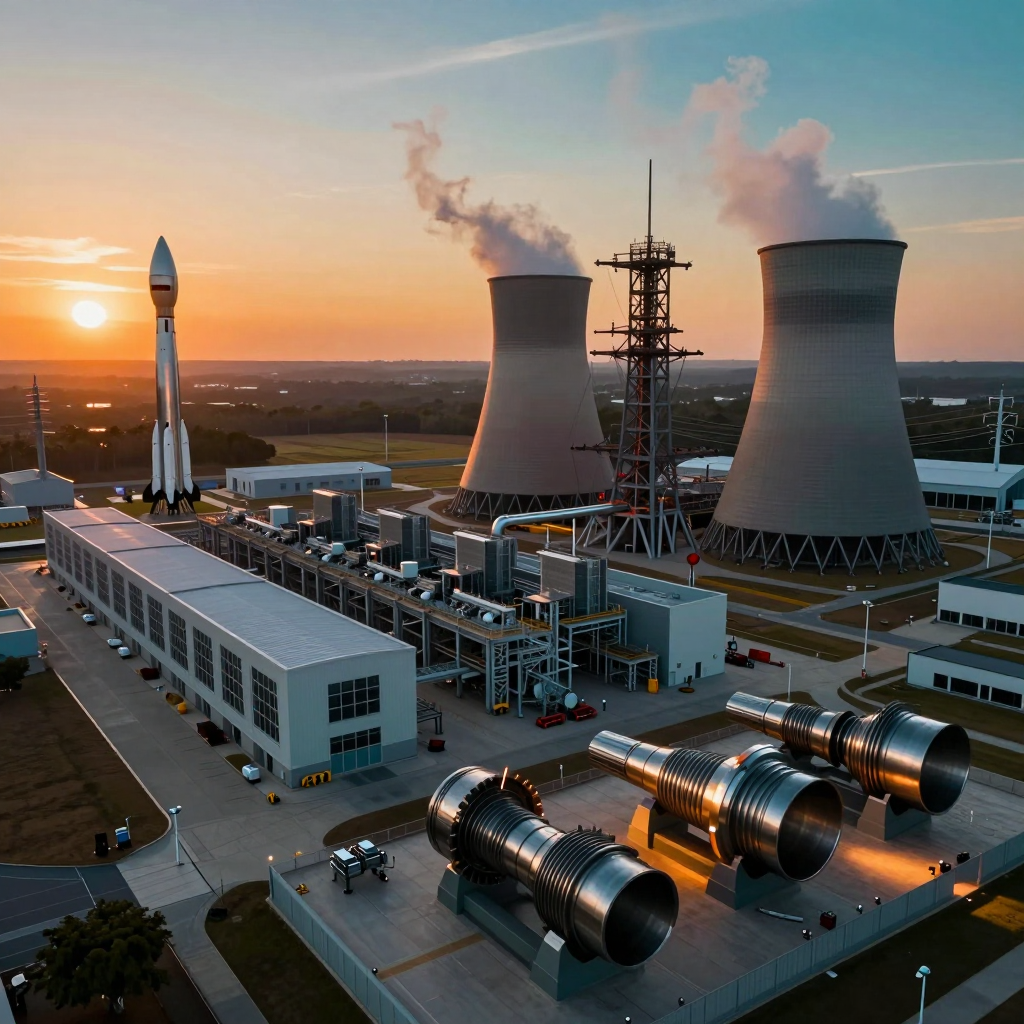
SpaceX is building a second data center project, Colossus II, in Memphis, Tennessee. Elon Musk said he spends four days a week in Memphis to bring it online. He argued that the main constraint on deploying superintelligence is not chips but power, cooling, and supporting infrastructure, and said a SpaceX team is working on that problem.
One bottleneck is turbine supply. Turbine makers face delays of 12 to 18 months in obtaining the metals used for blades and vanes. SpaceX is using its own metal casting capabilities to produce these components, applying skills from its rocket manufacturing business to data center power.
Starship and Starlink
The next Starship test flight is expected in November, and SpaceX plans to try to recover both the first-stage booster and the second stage. Musk called recovering both stages a "massive technology milestone" but said that reflying both stages would be the true milestone.
Starlink has reached 13.6 million subscribers. Musk predicted that the growth of AI agents will increase demand for connectivity.
Outlook and What to Watch
Musk projected annual recurring revenue of "somewhere between $500 billion and $1 trillion" by the end of 2027, a very ambitious target relative to the $14.6 billion quarter just reported. Earlier this year he had said he expected SpaceX to reach $1 trillion in revenue in 2030.
Key questions for the coming quarters include whether the $35 billion to $40 billion in fourth-quarter capital spending translates into new compute capacity on schedule, how much of the Super Intelligence segment's growth comes from Cursor versus Grok versus neocloud rentals, and whether the one-off items in this quarter's results recur. Readers should also note that the third-quarter figures in this report come from TechCrunch's reading of the filing, and the original filing is the definitive source.
Sources
This report draws on TechCrunch's October 20, 2026 coverage of the results, along with earlier reporting from TechCrunch, S&P Global Market Intelligence, Axios, and others on SpaceX's IPO filing, second-quarter results, and the Cursor acquisition.
This article was compiled by the AIBARS editorial team with AI assistance. AI can make mistakes, so please check the original source for anything important. Spotted an error? Email [email protected].