OpenAI Posts 372 More Math Results From Its Unreleased Astra Model on GitHub
News Summary
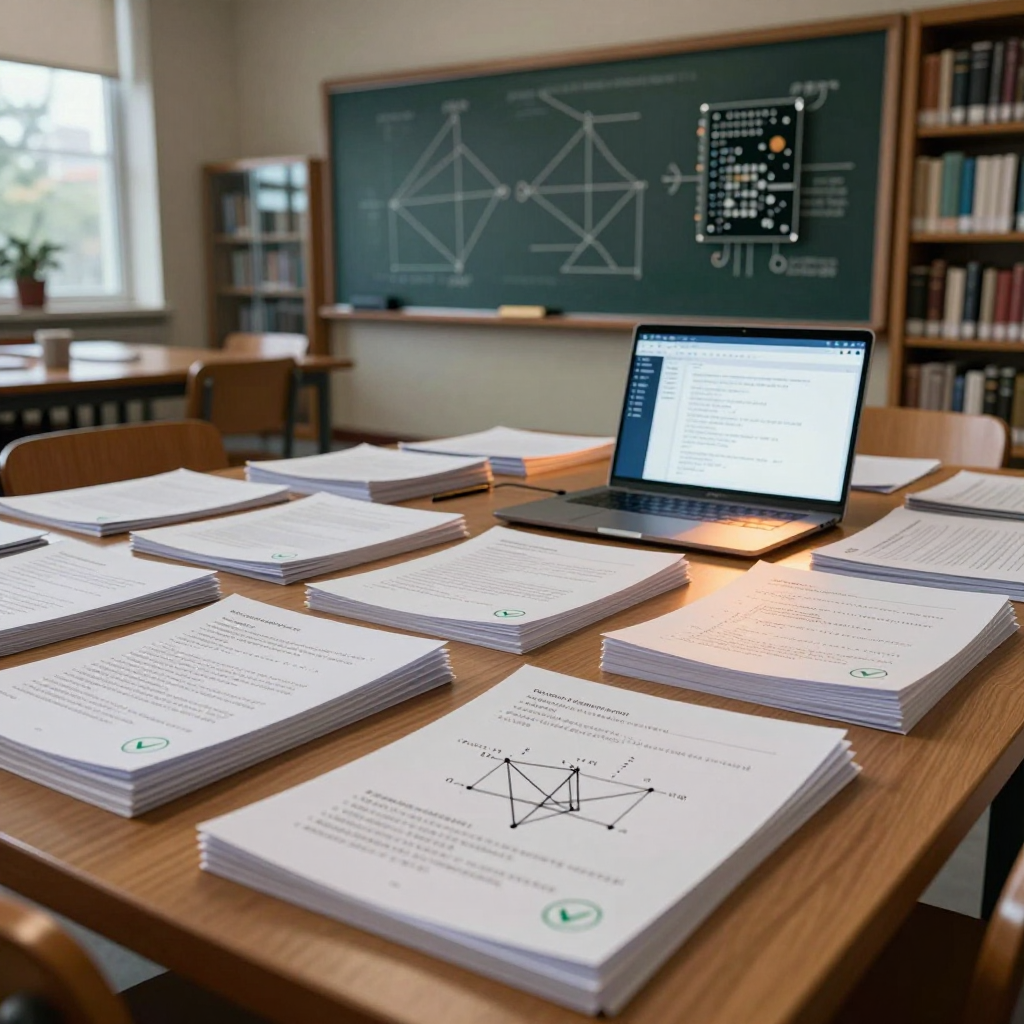
OpenAI has published a second, much larger batch of mathematical results on GitHub: 372 claims, all attributed to Astra, an internal model the company calls its next major release. According to coverage dated October 6, 2026 (Eastern Time, U.S. publication date), each result is said to resolve or substantially advance an open question in mathematics or theoretical computer science. Many of them come with machine-checkable proofs in the Lean programming language, but the model itself has not been released, so outside researchers cannot yet reproduce how the results were produced.
What OpenAI Released
The new release arrives about two months after OpenAI's first announcement, "Ten advances in mathematics and theoretical computer science," published on August 1, 2026 (Eastern Time). That first batch covered ten long-standing problems across eight fields, including group theory, operator algebras, coding theory and extremal combinatorics. It shipped with a 249-page manuscript and Lean 4 certificates in a public GitHub repository, and OpenAI said the tokens used would have cost roughly $2,000 at its API rates.
The October batch is larger by a factor of more than 37. Reports describe 372 results, with claims that include a solution to the four-dimensional Kakeya conjecture, improvements to some widely used computer algorithms, and partial progress related to the Riemann hypothesis. OpenAI says almost every result came from a single prompt given to a single AI agent. The company disclosed only average compute time, not individual prompts or per-result compute.
Why Lean Proofs Matter
Lean is a proof assistant: a program that checks every logical step of a proof mechanically. When a result is formalized in Lean, a reader does not have to trust the author. The software either accepts the proof or rejects it. Scientific American reports that Lean validation makes the verified proofs all but certain to be correct.
This is a useful teaching example of how computer-checked mathematics works. A Lean proof guarantees that a statement follows from its assumptions. It does not guarantee that the statement was formalized to mean what a human reader intended, and it says nothing about how the proof was found.
What Mathematicians Are Saying
Reaction has been mixed. Andrew Sutherland of MIT said that until the model is released and others can replicate the work, claims about solving problems in one shot with a single agent should be treated as unverified. Daniel Litt of the University of Toronto argued that if the community wants answers to these questions, there is little reason to rely on a company to hold the means of producing them. Terence Tao has criticized the pace at which AI labs are now generating results, calling it "insane."
Scientific American also notes that OpenAI did not fully follow the recommendations of an independent advisory group, that some results may have needed multiple attempts, and that some of the material is not yet understood by OpenAI's own mathematicians. Reviewing hundreds of results is a heavy task for a community of human experts.
The Citation Debate From the First Batch
On August 6, 2026 (Eastern Time), Scientific American reported that some experts said Astra failed to properly credit earlier work in two of the first ten results. Stephen Miller of Yeshiva University said a sphere-packing argument from his 2016 work was presented as original. Another result, on soficity in group theory, reportedly combined ideas from papers published in 2016 and 2019 without sufficient attribution. Francesco Fournier-Facio of the University of Cambridge said the announcement overlooked crucial recent developments, while Andreas Thom of Dresden University of Technology described the group theory proof as creative and at the same time elementary.
OpenAI acknowledged the issues. A spokesperson said the company would make small updates that week, consistent with standard academic practice.
What to Watch Next
Three questions will shape how these results are received. First, how many of the 372 claims survive independent review and are accepted into the published literature. Second, whether OpenAI makes Astra available so that the single-prompt claim can be tested. Third, whether the field develops norms for citing prior work and crediting AI-assisted discoveries. For students and educators, the episode shows both the promise of formal verification and the continuing need for human peer review.
Sourcing Note
The Verge's report on this release could not be retrieved during research, so the details above come from Scientific American and other coverage of OpenAI's August and October announcements. Claims about specific results come from OpenAI and have not all been independently confirmed.