Meta Opens Muse to DIY Hardware With Open-Source ESP32 Firmware and 5,000 Free Home Link Adapters
News Summary
On October 2, 2026 (Eastern Time), Meta opened its Muse personal AI agent to hardware tinkerers with a project called Muse Gadgets. The release gives developers open-source firmware and a Linux software development kit (SDK) so they can build their own physical devices, such as small displays, buttons, sensors and audio accessories, that talk to Muse. Alongside the developer toolkit, Meta showed a first-party example called Muse Home Link, a small USB-C powered adapter that lets Muse reach smart home gear on a local network.
What Meta Announced
Muse Gadgets is an open-source effort that lets developers create custom hardware connected to Muse, the personal AI agent Meta introduced on September 8, 2026. Muse is described as an agent that can book travel, fill out forms and shop on a user's behalf, and TechCrunch notes it has already proven popular with a broad audience. The new project extends that agent beyond a phone or computer screen and into dedicated, purpose-built objects.
Nat Friedman, head of product at Meta Superintelligence Labs, announced the project in a post on X. His post drew close to 30,000 views within hours, according to TechCrunch. Meta also set up a Discord channel where builders can get support and share projects.
What Developers Get
Meta is providing open-source firmware for ESP32 microcontroller boards and a Linux SDK that targets computers such as the Raspberry Pi. Reporting from Runtime Wire says the code is licensed under Apache 2.0. Engadget and other outlets report that developers can obtain an API token from the gadgets.muse.ai site and point a coding agent at the project's GitHub repository to get started.
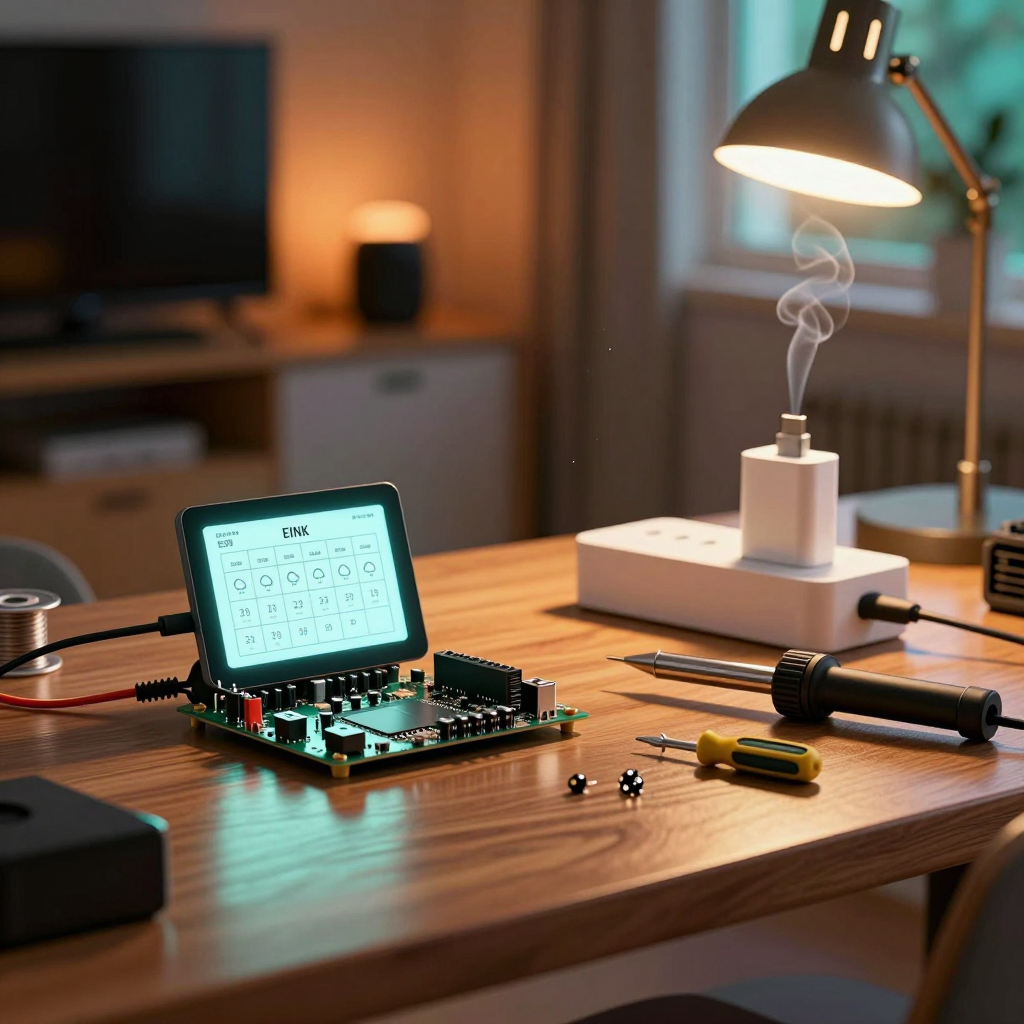
On the hardware side, the ESP32 route is aimed at low-cost builds with screens, audio input and output, and sensors. The Linux route supports custom commands and integrations such as Home Assistant. Meta also offers project ideas, including a dedicated E Ink display, an HDMI dongle for a television, and a small touchscreen accessory similar in spirit to the Muse Charm.
Muse Home Link
To show what the platform can do, Meta built its own gadget. According to Friedman, Muse Home Link is "a little usb-c powered device that allows Muse to connect to your home network to talk to smart home devices like TVs and speakers and anything else that exposes https."
Runtime Wire reports the adapter is built on Espressif's ESP32-C5 chip, keeps connections local through a local HTTP API, and cannot be reflashed, unlike the do-it-yourself boards. Listed integrations include Philips Hue, Sonos, Apple TV, Google Nest and Samsung TVs. Meta manufactured 5,000 units and is offering them free to active U.S. Muse subscribers, one per person on a first-come basis while supplies last. Shipping is expected within weeks, in October 2026.
Limits and Caveats
The project comes with an important disclaimer reported by Runtime Wire: the SDK and tokens are not a supported product or developer platform, and Meta can change or withdraw access at any time. Tokens are controlled by Meta, and each token is limited to 50 devices. No pricing was given for developer hardware, since builders supply their own boards.
Wider Context
The announcement landed alongside other Muse business moves. TechCrunch reports Meta launched Muse for Small Business, which is free with usage limits and integrates with Shopify, Dropbox and Slack, and created a business unit called Meta Enterprise Platform. Taken together, the releases suggest Meta wants Muse to become a platform that works across consumer devices, home networks and workplaces.
Why It Matters for Learners
For students and hobbyists, the release is a practical entry point into embedded systems and AI agents. Inexpensive ESP32 boards and Raspberry Pi computers are widely used in classrooms and maker spaces, so connecting them to an AI agent offers a hands-on way to learn about microcontrollers, networking, sensors and agent-driven automation. The unsupported status of the SDK means projects are best treated as experiments rather than long-term products.
Sources
Coverage and facts were cross-checked across TechCrunch, Engadget, Runtime Wire, iPhone in Canada, Unite.AI and Nat Friedman's public post on X.