Arm CEO Says Chip Shortage Is Slowing AI's Race to Cure Cancer
News Summary
Arm Holdings CEO Rene Haas said this week that artificial intelligence will eventually crack one of medicine's hardest problems — finding a cure for cancer — but warned that a persistent shortage of advanced chips is currently slowing the data-center buildout AI research depends on. Haas made the comments in an interview for the BBC's "Big Boss Interview" podcast, published in early September 2026, 9:00 AM Eastern Time.
AI's Path to Understanding Cancer
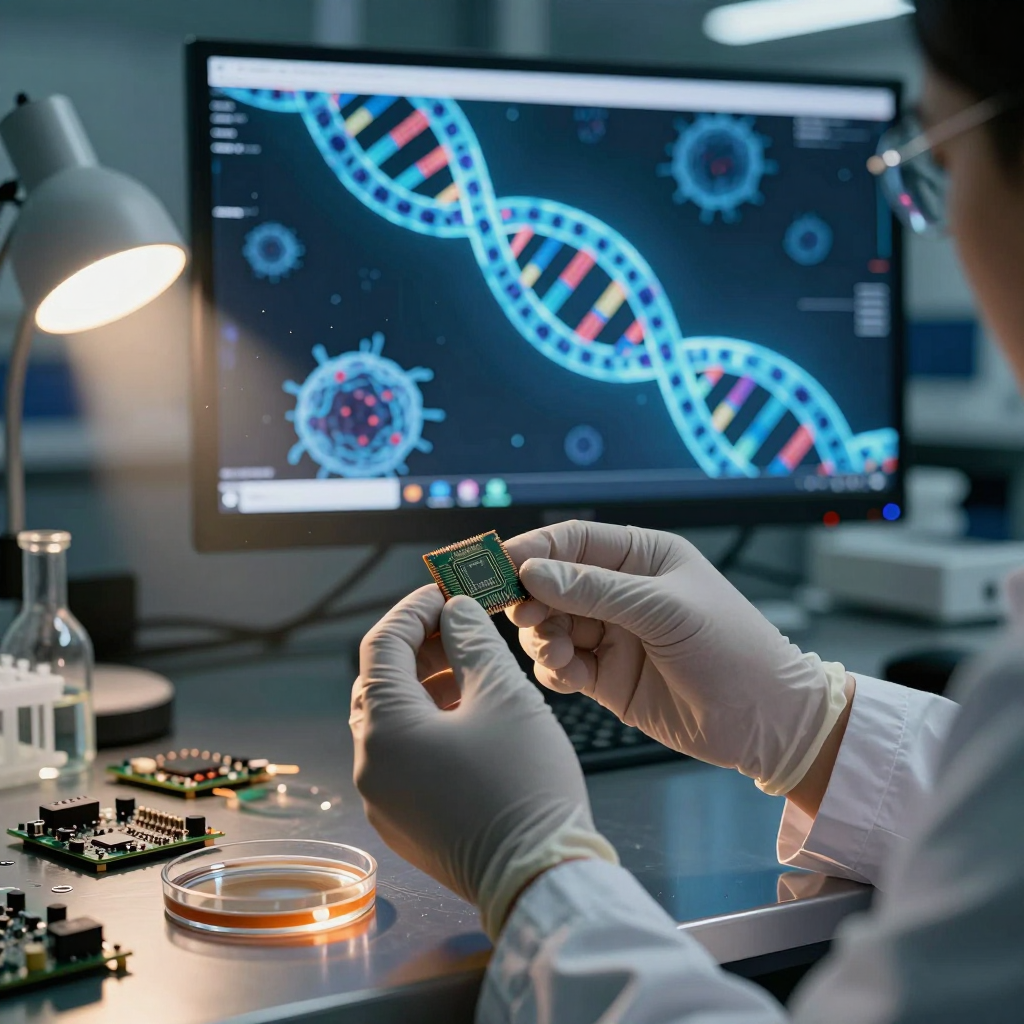
Haas, who leads the Cambridge-based semiconductor design company that licenses the architecture underpinning more than 350 billion chips worldwide, told the BBC that AI is on track to solve problems that have eluded human researchers for decades. He specifically pointed to the challenge of modeling how DNA markers are affected by cancer at the cellular level — work he described as "too complex" for both human researchers and today's AI systems to fully solve right now.
Despite that complexity, Haas expressed confidence that sufficiently powerful AI models will eventually simulate these biological processes with enough precision to unlock new treatments and accelerate drug discovery. He said he believes AI will help find a cure for cancer within our lifetime, framing it as a matter of when — not if — computing power and model sophistication catch up to the scale of the problem.
The Chip Shortage Bottleneck
Haas also used the interview to flag a more immediate obstacle: a global shortage of the advanced chips needed to build out AI data centers. He said this shortage is directly throttling the pace of AI-driven research, including the kind of large-scale biological modeling that could eventually contribute to cancer breakthroughs. In his view, the limiting factor for progress isn't a lack of ideas or algorithms, but the physical infrastructure — chips and data-center capacity — required to run increasingly large AI models.
Arm's own response to rising compute demand has included the March 2026 launch of its AGI CPU product line, a chip architecture designed specifically for AI-optimized workloads, reflecting the company's bet that specialized hardware will be central to scaling AI research over the coming years.
Broader Predictions on AI and the Workforce
Beyond healthcare, Haas offered a broader outlook on how AI will reshape daily life and work. He predicted that humanoid robots would become common within the next five years, eventually taking on real manufacturing and repair tasks. On the question of job displacement, Haas pushed back on the most alarming forecasts, saying that predictions of AI completely replacing large swaths of the workforce are "a bit overstated" and that new opportunities created by the technology will offset much of the disruption.
Haas, who has previously served on the board of pharmaceutical company AstraZeneca, brings a perspective that bridges the chip industry and life sciences, lending additional weight to his comments on how computing infrastructure could shape the future of medical research.
What Comes Next
Haas's remarks arrive as global demand for AI computing capacity continues to outstrip supply, a dynamic that has drawn attention from technology leaders, investors, and policymakers alike. His comments suggest that closing the gap between chip supply and AI ambitions — including ambitions in fields like oncology research — will remain a defining challenge for the industry in the near term.