Meta Is Testing Three Different Robot Makers to Automate Its AI Data Centers
News Summary
Meta is running live trials of robotic arms and mobile robot platforms inside several of its data center campuses, testing whether machines can take over routine physical maintenance tasks such as swapping networking cables, power-cycling frozen servers, and reseating hardware components. The effort, first detailed in reporting published around 5:00 AM Eastern Time on August 28, 2026, comes as Meta races to build out the physical infrastructure needed to support its growing artificial intelligence ambitions, and it has stirred concern among some data center technicians about the long-term shape of their jobs.
What Meta Is Testing
Meta is piloting hardware from at least three robotics suppliers across different facilities. At its Altoona, Iowa, campus, the company is testing dual-arm robots built by San Francisco-based Watney Robotics, designed specifically for cabling work — identifying, disconnecting, and reconnecting the dense bundles of networking cables that link servers inside AI training clusters. Separately, Meta is evaluating a Kinova Gen3 robotic arm, made by the Quebec-based robotics firm Kinova, for power-cycling tasks — essentially turning servers off and back on, or cutting power entirely, without a technician needing to physically access the rack.
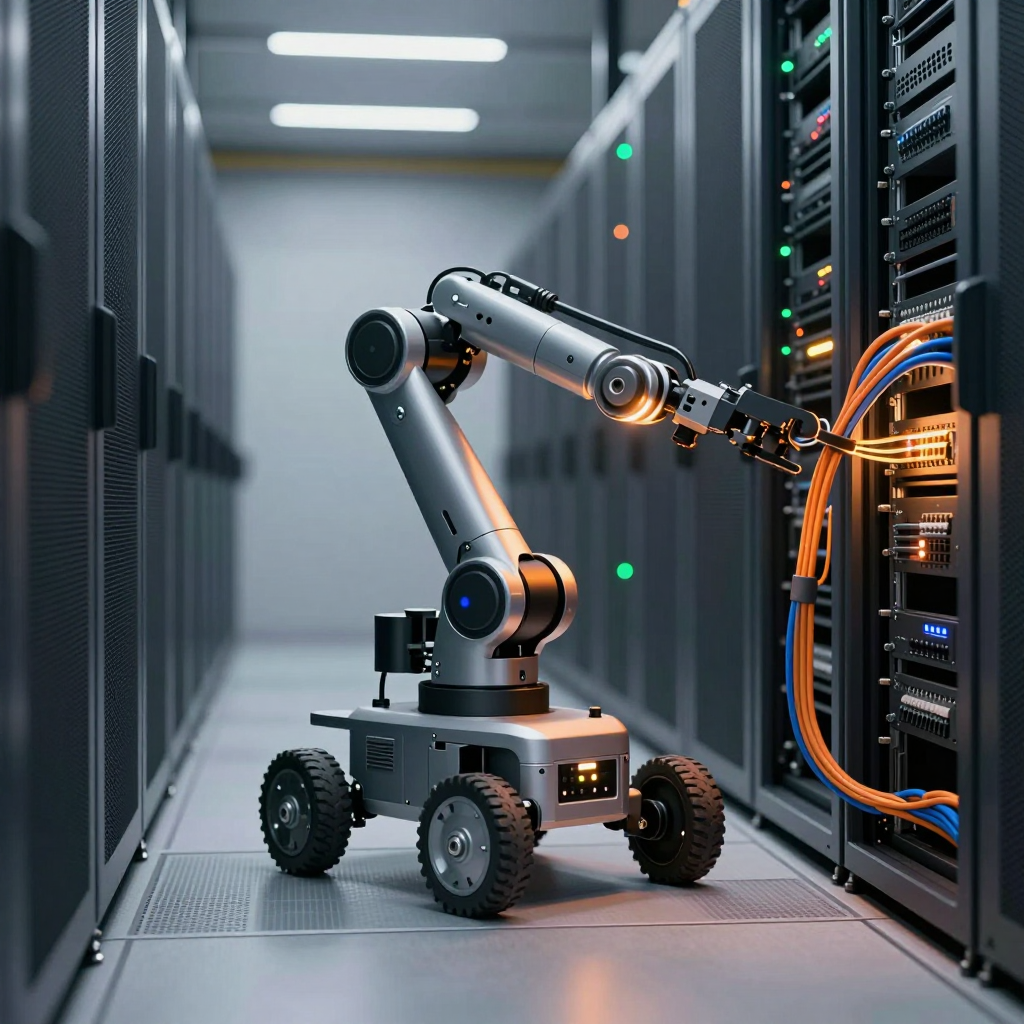
At its newer Prometheus campus in New Albany, Ohio — one of the largest AI-focused data center developments in the world, built to house hundreds of thousands of Nvidia GB200 and GB300 Blackwell-generation GPU systems — Meta is testing robots from Zurich-based industrial automation company ABB. These machines are mounted on four-wheeled mobile platforms so they can move between racks and rows, and are currently used to reseat components such as memory modules or network cards. Engineers see this mobile platform design as a stepping stone toward machines that could eventually handle a wider range of tasks with less direct human supervision.
Why Meta Is Pursuing This
The push reflects the sheer physical scale of the infrastructure buildout underpinning modern AI systems. Data centers built for AI training, like Prometheus, pack far more computing hardware, cabling, and power distribution equipment into a given footprint than earlier generations of general-purpose data centers, and that density translates directly into more physical maintenance work: cables that fail, components that overheat, servers that need to be power-cycled after a fault. As Meta and its industry peers keep expanding the number and size of these campuses, the sheer volume of routine physical tasks is growing quickly, and robotics is one avenue the company is exploring to keep pace without a proportional increase in headcount for the most repetitive jobs.
Meta has also framed the effort as a response to a broader labor market issue rather than a pure cost-cutting measure. Company spokesperson Francis Brennan pointed to a nationwide shortage of skilled tradespeople — including electricians, fiber technicians, and other specialists needed to build and run large data centers — arguing that the country is in the middle of "its biggest infrastructure boom since World War II" and that the shortage of qualified workers, not a surplus, is the more pressing constraint. Consistent with that framing, Meta separately committed $115 million to a training initiative sometimes referred to as an "America's Workforce Academy," offering a free, roughly five-week training course with a job guarantee for graduates entering skilled trades tied to data center construction and operations, with an initial rollout planned across Indiana, Louisiana, Ohio, and Texas.
How Workers Are Reacting
Not everyone inside Meta's data center operations is reassured. According to accounts from current and former workers, some technicians worry that even partial automation of tasks like cable swapping could eventually reduce the number of people needed for certain roles, or push remaining human workers toward lower-paid supervisory or support positions rather than the hands-on technical work they do today. One worker estimated that a fully reliable cable-swapping robot could eventually take over as much as 80 percent of the manual work currently performed in that specific task category, a figure that, if realized, would represent a meaningful shift in staffing needs even if it does not translate into outright layoffs.
Current Limitations of the Technology
Despite the ambition behind the program, the robots being tested today are far from a finished, autonomous solution. Reporting on the trials indicates the machines remain notably slower than experienced human technicians at most tasks, still require a degree of human supervision or intervention to handle exceptions, and struggle with some of the more complex, densely packed cabling arrangements found around the newest generation of AI accelerator systems, including racks built around Nvidia's GB300 platform. Battery life, physical obstacles in working aisles, and the need for reliable visual inspection of completed work are also cited as ongoing engineering challenges. Meta's approach so far appears to be incremental: narrow, well-defined tasks such as power-cycling or cable identification are being automated first, while more complex diagnostic and repair work continues to rely on human technicians.
Broader Context
Meta's data center robotics trials sit alongside a wider set of infrastructure investments the company has been making to support its AI compute roadmap, including large capital commitments to new campuses like Prometheus and additional power-purchase agreements, including nuclear energy deals, to secure the electricity needed to run gigawatt-scale facilities. Other major cloud and AI infrastructure operators have also explored automation and robotics for data center operations as facility density and scale increase, though the specifics of Meta's current multi-vendor approach — running parallel pilots with Watney Robotics, Kinova, and ABB across different sites — offer a relatively detailed public look at how one of the largest AI infrastructure builders is thinking about the intersection of physical automation and workforce planning during this phase of AI buildout.