Gemini Omni 1.1 Flash Extends AI Video to 40 Seconds With 4K Upscaling
News Summary
Google has rolled out Gemini Omni 1.1 Flash, an updated production version of its native multimodal video generation and editing model, adding three headline capabilities: scene extension up to 40 seconds, first/last frame control for directing camera motion between two supplied keyframes, and 4K upscaled output. The update, announced August 28-29, 2026 Pacific Time, pushes Omni from a one-shot video generator toward what Google frames as a "directable" creative tool that developers and studios can steer shot by shot.
What's New in Omni 1.1 Flash
The centerpiece feature is scene extension. Where earlier versions of Omni could only look at the final frame of a clip when continuing it, the 1.1 Flash update analyzes up to 10 seconds of prior context each time a user asks the model to continue a scene. Extensions are generated in increments of roughly 3 to 10 seconds per call and can be stacked in 10-second blocks until a clip reaches the 40-second ceiling. Extensions only append to the end of a clip — the model cannot prepend footage before the start or insert new material into the middle of an existing sequence.
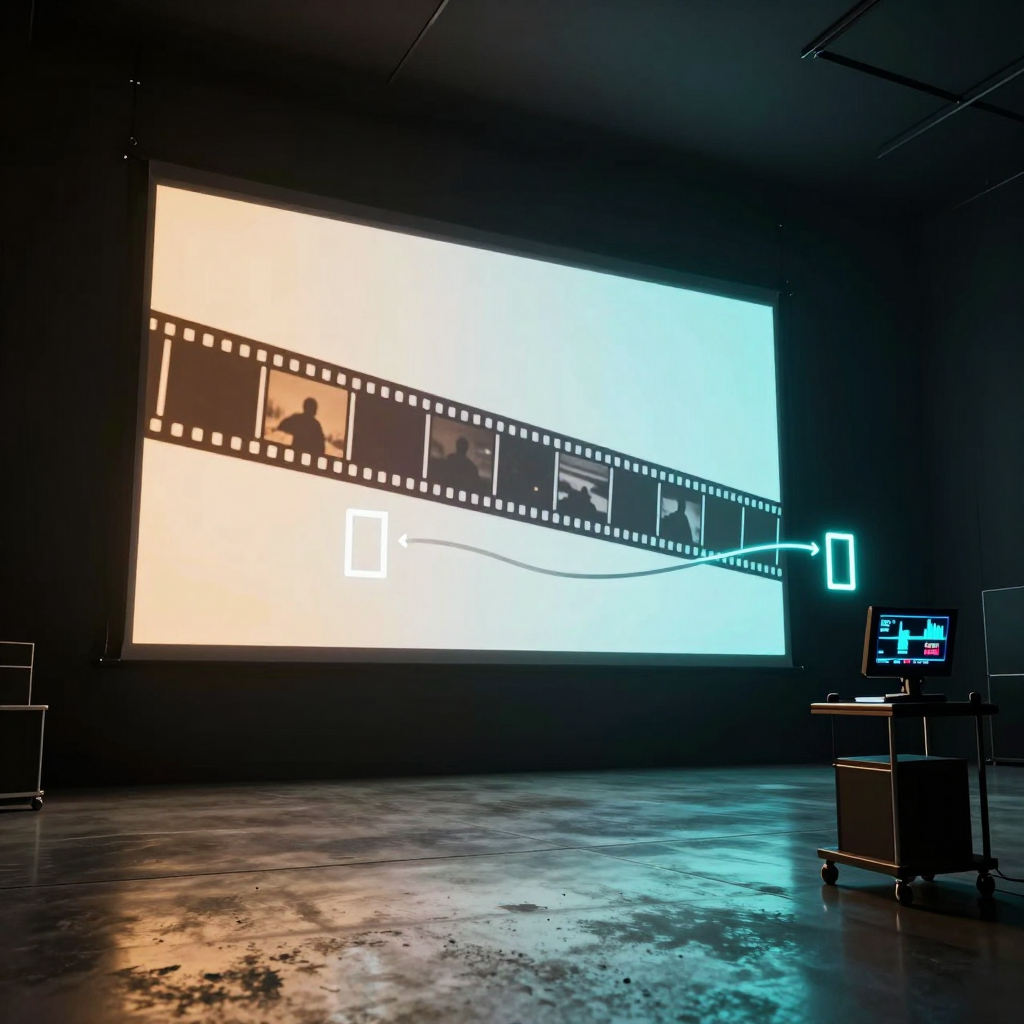
First/last frame control lets a user supply a starting image and an ending image, tagged in the prompt as <FIRST_FRAME> and <LAST_FRAME>, and have the model generate everything in between. Google says this is the intended path for effects such as orbital camera moves, dolly zooms, and seamless loops, since the model is solving for a specific visual destination rather than extrapolating freely from a single starting point.
A related feature, video references, allows up to three short reference clips (each capped at three seconds) to be fed into a generation to help the model preserve a character's appearance or a scene's visual style across cuts. Audio embedded in those reference clips is ignored by the model.
4K Upscaling and Draft Workflow
Output resolution is configurable at 360p, 720p (the default), 1080p, and 4K. Google has been explicit that 1080p and 4K outputs are upscaled from the model's native generation rather than rendered natively at those resolutions. To support faster iteration, 360p draft previews render up to 60% faster and cost roughly a third as much as the standard 720p tier, letting creators rough out a sequence cheaply before committing to a full-resolution render.
Pricing and Technical Constraints
Gemini Omni 1.1 Flash is billed per token: input tokens run $1.50 per 1 million, text output is $9.00 per 1 million, and video output is $17.50 per 1 million tokens, which Google translates to roughly $0.10 per second of 720p video. There is no free tier and no provisioned-throughput option — access is paid-tier only through the Gemini API.
The model currently omits several controls common in other generative systems: there are no system instructions, temperature or top_p sampling controls, stop sequences, or negative prompts. Voice editing and audio references are not supported. Google notes that English prompts are fully supported and tested, while performance in other languages has not been formally evaluated.
Every clip the model produces is watermarked with SynthID, an invisible marker that is not visible to viewers but can be detected programmatically to verify that a video was AI-generated.
Availability and Rollout
Gemini Omni 1.1 Flash is available immediately through the Gemini API in Google AI Studio and through the Gemini Enterprise Agent Platform. It is also rolling out globally inside Google Flow for subscribers on the AI Plus, Pro, and Ultra tiers, and the scene-extension feature specifically is coming to those same subscribers directly inside the Gemini app.
Industry Reaction and Early Adopters
Google says several companies have already integrated or tested the updated model ahead of the public rollout. Adobe has built it into Adobe Firefly, and Figma's creative director for its Weave product said the update "takes teams beyond generating videos to truly directing them." GMI Cloud highlighted the model's reliability for educational content production, and Runway's chief creative officer pointed to how smoothly the new controls fit into existing production workflows. Google lists use cases spanning creative production tools, media editing software, real estate presentation videos, and educational content platforms as target applications for developers building on the model.