Microsoft Maia 300 Packs 288GB of HBM4 to Cut Reliance on Nvidia
News Summary
Microsoft announced Azure Maia 300, its third-generation in-house AI accelerator, on October 12, 2026 (Pacific Time, based on publication dates of the coverage). The chip is designed to run large AI workloads inside Microsoft's own cloud and to reduce how much the company depends on Nvidia's GPUs. Production deployments are planned to begin in 2027, and Microsoft says it intends to scale the Maia family to multi-gigawatt levels. All performance figures below are Microsoft's own claims and have not been independently tested.
What Microsoft Announced
Maia 300 follows Maia 100 and Maia 200 as the third generation of Microsoft's custom accelerator line. Microsoft positions the family as the main inference platform for its own products, meaning the hardware that answers user requests once an AI model has been trained. Maia 200 is already running production workloads, including Microsoft Copilot, and is helping the company's MAI team develop next-generation models. Microsoft plans to bring GitHub Copilot and Microsoft Foundry workloads to Maia 200 by the end of 2026, with rollout regions including the United States, Europe and Australia.
Key Hardware Specifications
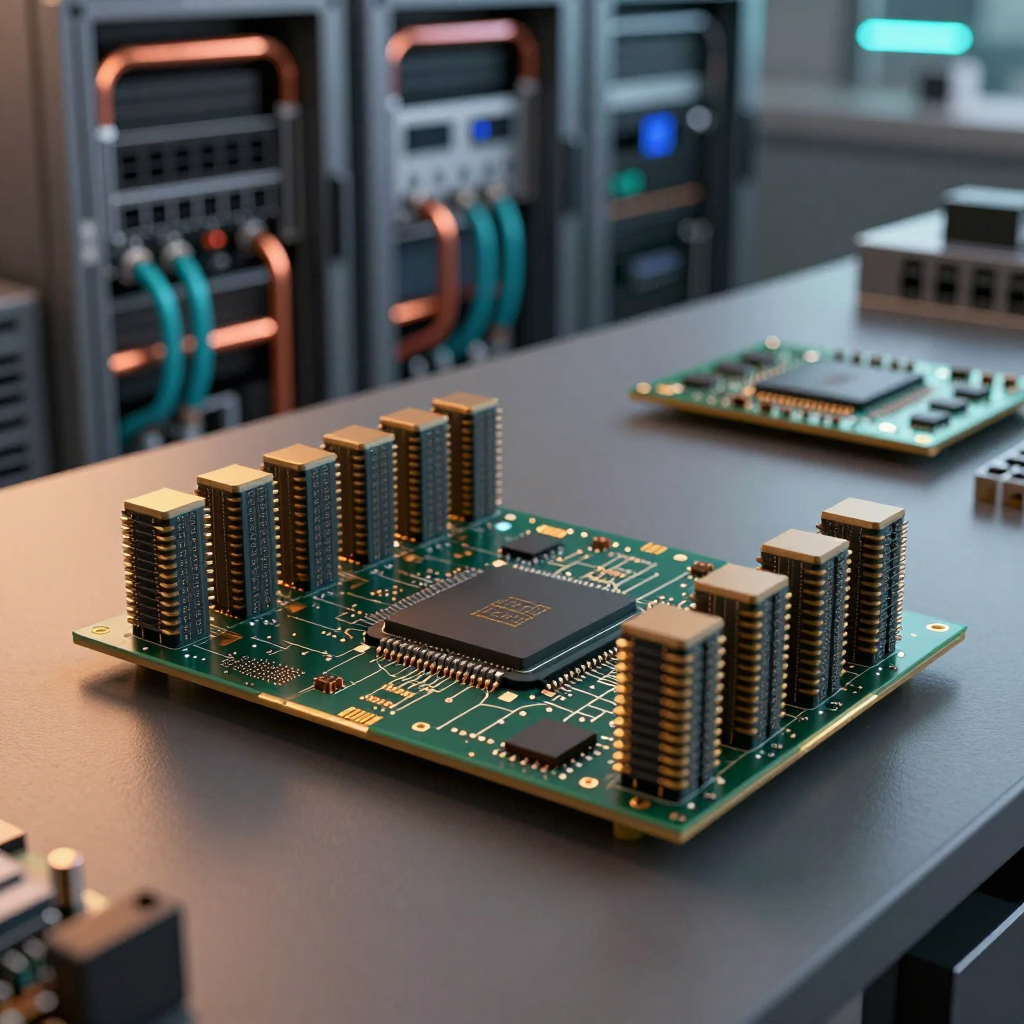
Each Maia 300 accelerator pairs eight HBM4 memory stacks, giving 288 GB of memory and 18 TB/s of bandwidth. The compute chiplets are built on TSMC's N2P process, and the power envelope is reported at about 950 W. At rack level, a 96-accelerator rack draws roughly 167 kW and offers about 27.6 TB of high-bandwidth memory with around 1.7 PB/s of aggregate memory bandwidth.
For comparison, reporting on Maia 200 describes a TSMC 3nm design with 216 GB of HBM3e, 7 TB/s of bandwidth and about 750 W of power. Some secondary figures differ between outlets, so readers should treat finer details as provisional until Microsoft publishes full documentation.
Claimed Improvements Over Maia 200
Microsoft claims up to 7x rack-scale token throughput and more than 2.5x performance per watt compared with Maia 200. Coverage also cites 36% more compute performance, 33% more memory capacity, 2.5x memory bandwidth and 14% more scale-up bandwidth. Microsoft further says Maia 300 delivers about 40% more tokens per megawatt than leading GPU-based systems, a metric that matters because electricity and cooling are now major limits on data center growth.
Why Memory and Efficiency Matter
Modern language models spend much of their time moving data rather than doing arithmetic. High-bandwidth memory feeds the processor with model weights, so more capacity and bandwidth let a chip serve larger models or more users at once. "Tokens per watt" measures how much text a system can generate for each unit of power, which directly affects the cost of running AI services at scale.
Supply Chain and Volume
Before the announcement, reports citing The Information said Microsoft had discussed securing TSMC capacity for more than 300,000 Maia 300 chips for delivery in 2027, with a longer-term ambition of over one million. Andrew Wall, general manager of Azure Maia, said the reported figures did not reflect the scale of the program, without sharing production volumes. Industry watchers note that advanced packaging and HBM supply could affect the pace.
Impact on Nvidia and the AI Chip Market
Nvidia GPUs remain the dominant hardware for AI training, and analysts do not expect a quick end to that position. Still, custom silicon lets large cloud providers control cost and supply for their own services, and Microsoft is reportedly looking to offer Maia capacity to outside customers such as Anthropic. Maia 200 has been viewed as less mature than rival hardware and saw slow uptake, so Maia 300 will be judged on real deployments in 2027 rather than on launch-day numbers.
What to Watch Next
Key signals include independent benchmarks, the software stack available to developers, the share of Copilot and Foundry traffic served by Maia, and whether external customers adopt it. Microsoft's multi-gigawatt target also highlights how power infrastructure is becoming as important as chip design in the AI era.
Sources
Coverage consulted includes The Verge, Unite.AI, Techzine Global, Neowin, Converge Digest, Notebookcheck, Moor Insights & Strategy, eWeek and TheNextWeb.
This article was compiled by the AIBARS editorial team with AI assistance. AI can make mistakes, so please check the original source for anything important. Spotted an error? Email [email protected].