OpenAI Acquires Camera Startup Glass Imaging for Over $300 Million
News Summary
OpenAI has acquired Glass Imaging, a small Los Altos, California-based startup that builds AI-driven smartphone camera technology, in a deal worth more than $300 million, according to a report from The Wall Street Journal published on September 14, 2026, Eastern Time. Neither OpenAI nor Glass Imaging has publicly confirmed the transaction, and OpenAI declined to comment when reached by reporters. The acquisition adds a computational photography team to OpenAI's growing hardware division at a moment when the company is racing to bring its first consumer devices to market.
What Glass Imaging Does
Glass Imaging was founded in 2019 by Ziv Attar and Tom Bishop, two engineers who previously worked at Apple on the technology behind the iPhone's Portrait Mode. Attar led computational photography projects at Apple, including the Portrait Mode feature that debuted with the iPhone 7 Plus, and had earlier founded LinX Imaging, a dual-camera depth-sensing startup that Apple itself acquired in 2015. Bishop worked on core Portrait Mode technology at Apple between 2013 and 2018.
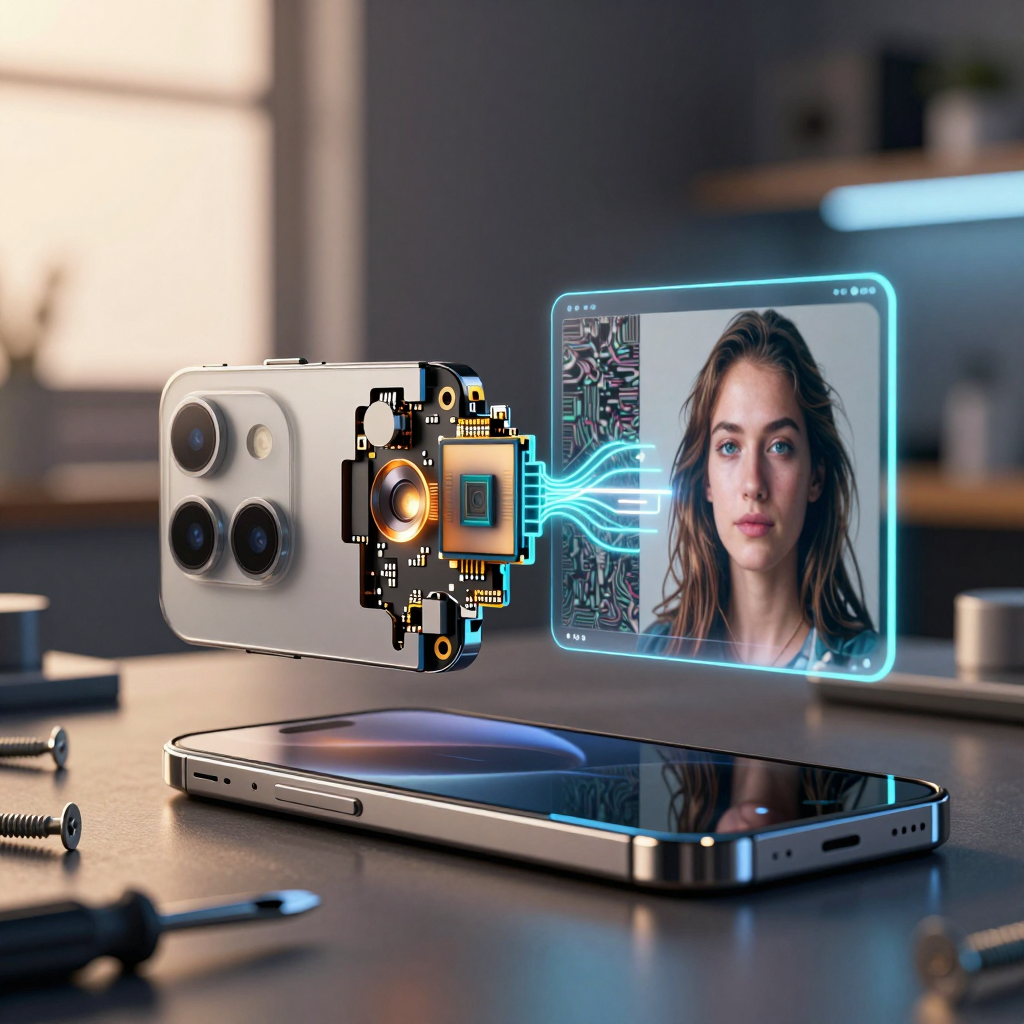
The company's flagship product, GlassAI, is described as a neural image signal processor, or neural ISP. Rather than applying AI enhancements after a photo has already been captured, as most smartphone software does, GlassAI is trained on the specific characteristics of an individual camera module and processes raw sensor data at the moment the shutter is pressed. Glass Imaging's premise was that traditional gains in smartphone photography — larger sensors, additional lenses, more complex optics — had begun hitting physical limits, and that AI could extract meaningfully better images from the compact camera hardware already inside phones. Reports indicate the company's imaging technology has previously been used in Honor smartphones. Before the OpenAI deal, Glass Imaging had raised approximately $30 million in funding from investors.
Why OpenAI Wants a Camera Company
The purchase fits into a broader pattern of OpenAI expanding well beyond chatbots and AI models into physical consumer products. In May 2025, OpenAI paid roughly $6.5 billion in stock to acquire io Products, the hardware startup co-founded by former Apple design chief Jony Ive, in a bid to build what the companies have described as "AI-native" devices. Since then, OpenAI has been reported to be developing a range of hardware, including smart glasses, a wearable pin, a digital voice recorder, and a screenless speaker expected to be priced around $300, with target launches in late 2026 or 2027.
Bringing Glass Imaging's neural ISP expertise in-house suggests OpenAI wants direct control over how its future devices capture and process images, rather than relying on off-the-shelf camera software from third-party suppliers. Camera systems are widely seen as one of the most technically demanding — and most visible to consumers — components of any smartphone-like device, and computational photography has become a key differentiator among established phone makers. By absorbing a team with direct Apple Portrait Mode pedigree, OpenAI gains specialized talent that understands both the hardware constraints of compact camera modules and the AI techniques needed to push image quality further.
Industry Context
The deal underscores how AI labs are increasingly competing not just on software and model capability but on integrated hardware experiences. OpenAI's hardware ambitions have accelerated significantly since the io Products acquisition, with the company reportedly working alongside manufacturing partners to bring multiple device categories to market within roughly a year. Acquiring specialized imaging talent through smaller, targeted deals like the Glass Imaging purchase — rather than building comparable capabilities from scratch — allows OpenAI to move faster in a hardware race that also includes established consumer electronics companies and other well-funded AI labs pursuing their own device strategies.
As with many of OpenAI's hardware-related moves, full details of the Glass Imaging acquisition, including the fate of its existing products and customers, integration plans for its engineering team, and how its technology will surface in OpenAI's future devices, have not been officially disclosed by either company.