Google to Invest $15 Billion in Finland's Biggest-Ever AI Infrastructure Buildout
News Summary
Google has announced a landmark investment of at least €13 billion (approximately $15.1 billion) to expand its artificial intelligence infrastructure across Finland over the next two years, marking the company's largest single investment in Europe to date. Confirmed on September 9, 2026 Eastern Time, the plan covers new data centers, clean energy projects, and grid upgrades designed to support the growing global demand for AI services such as Gemini, Search, Maps, and YouTube.
What Google Is Building
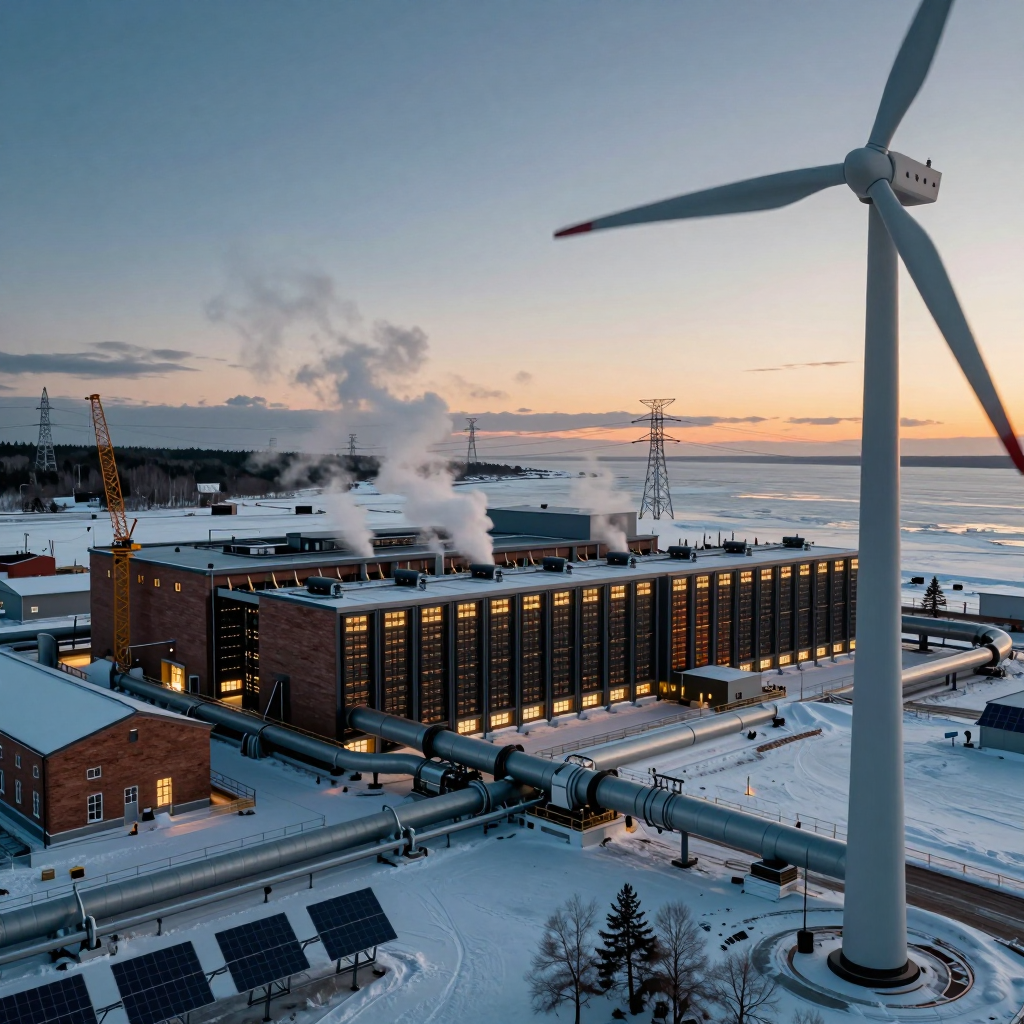
The investment package includes construction of at least three new data centers alongside a major expansion of Google's existing campus in Hamina, a coastal city in southeastern Finland. The Hamina site has special significance for the company: fifteen years ago, Google converted a former paper mill there into one of its first European data centers, and it has since grown into a roughly €4.5 billion campus known for an innovative seawater cooling system that reduces energy consumption.
Beyond Hamina, the new spending will fund a hub in Muhos, a Finnish community that has embraced circular-economy principles in its data center design, as well as continued development near Kajaani and Vaala. Collectively, the buildout represents one of the most concentrated AI infrastructure expansions announced anywhere in Europe this year.
Clean Energy and Grid Investment
A significant share of the €13 billion will go toward clean energy generation, battery storage, and improvements to Finland's electricity grid rather than data center construction alone. Google has said the investment will support new renewable power projects to help meet the substantial electricity needs of AI computing while keeping the expansion aligned with low-carbon energy goals. Finland's cold climate and abundant low-carbon electricity supply have long made it an attractive location for large-scale computing infrastructure, since cooler ambient temperatures reduce the energy required to keep servers from overheating.
Timeline and Economic Impact
The bulk of the construction work is scheduled to take place during 2027 and 2028. According to figures released alongside the announcement, the initial construction phase is projected to support roughly 37,000 jobs nationwide and contribute around €3.6 billion annually to Finland's gross domestic product. Once operational, the expanded facilities are expected to sustain approximately 7,000 jobs on an ongoing basis.
Google also committed €31 million over the next four years to local communities in Hamina, Kajaani, Muhos, and Vaala, with funding directed toward education programs and regional economic development initiatives.
Why Finland
Finland has increasingly become a preferred destination for hyperscale data center investment. Its combination of a naturally cold climate, reliable renewable energy resources, and existing digital infrastructure lowers both the operating costs and the environmental footprint of large computing facilities. Google's long operating history in the country, dating back to its original Hamina conversion project, gives the company an established base of local expertise and community relationships to build upon as it scales up capacity for the AI era.
Broader Context
The announcement reflects a wider pattern among major technology companies racing to secure the computing capacity needed to train and run advanced AI models. As demand for AI-powered products continues to climb worldwide, companies including Google have been announcing increasingly large, multi-year infrastructure commitments across Europe, North America, and Asia. Google's Finland investment stands out both for its scale and for its emphasis on pairing computing capacity growth with parallel investment in clean energy generation and grid modernization.