Navitas to Acquire Claros for Up to $232.8 Million to Power AI Chips
News Summary
Navitas Semiconductor Corporation (Nasdaq: NVTS) announced on August 24, 2026 (Eastern Time) that it has signed a definitive agreement to acquire Claros, Inc., a power management startup that designs vertical power delivery (VPD) and integrated voltage regulator (IVR) technology purpose-built for next-generation AI data centers. The deal is valued at up to approximately $232.8 million and is aimed at extending Navitas' power semiconductor portfolio all the way from the electrical grid to the AI accelerator chip itself, a path the companies describe as "grid-to-xPU."
Deal Structure and Valuation
The transaction is structured as roughly $216.0 million payable at closing, made up of a combination of cash and shares of Navitas Class A common stock. The remaining portion of the deal value is contingent, to be paid out in additional stock if Claros hits specific business milestones over the two years following the closing date. The headline valuation of up to $232.8 million was calculated using Navitas' closing share price of $12.97 on August 21, 2026 (Eastern Time). Both companies' boards of directors have unanimously approved the agreement, and the acquisition is expected to close before the end of 2026, subject to customary closing conditions, including regulatory approvals.
What Claros Brings to the Table
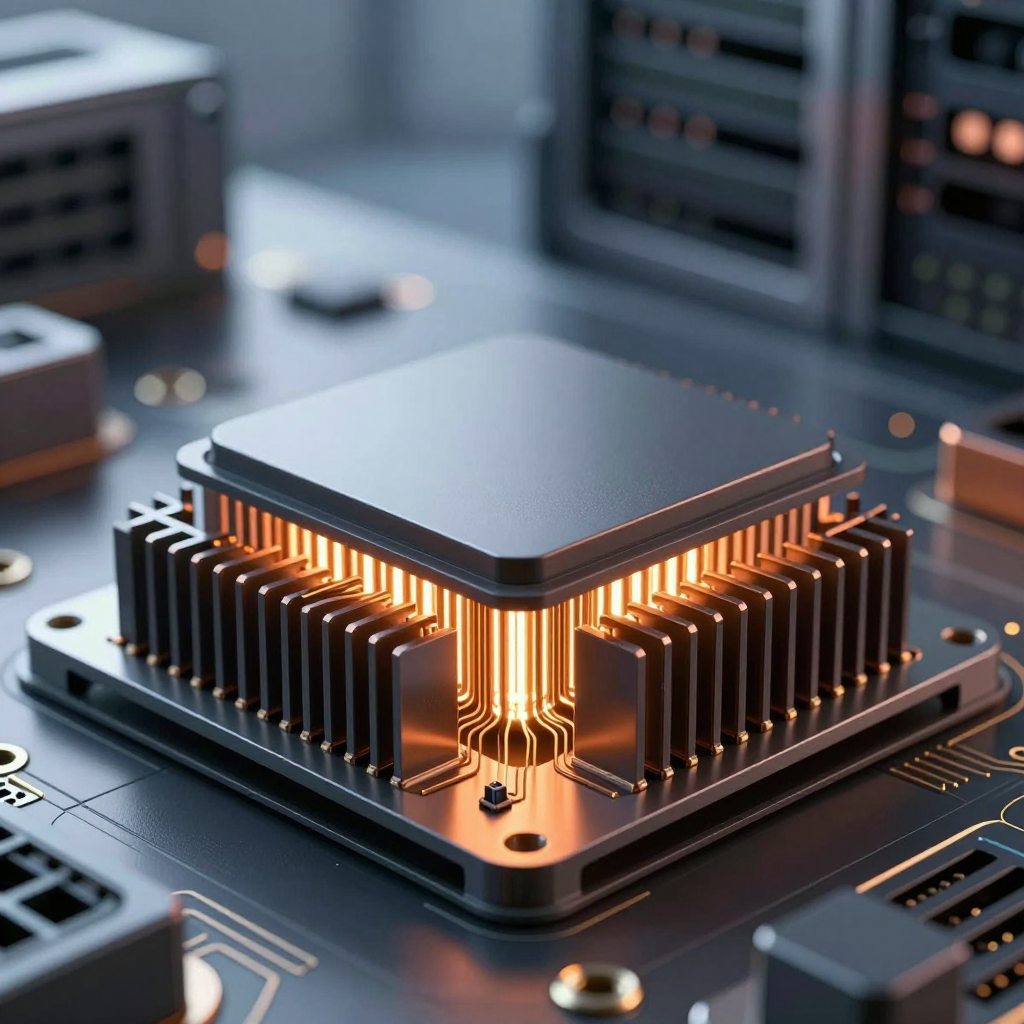
Claros, founded in 2024, has developed vertical power delivery and integrated voltage regulator technology that changes where power conversion physically happens on a server board. Instead of routing power several inches across a printed circuit board before it reaches a processor, Claros' approach places power conversion directly beneath or inside the chip package itself, shrinking that distance from inches to millimeters. For AI accelerators that draw very high current at very high switching speeds, shortening this path reduces electrical resistance losses and improves voltage stability, which becomes increasingly important as chip power demands continue to climb.
Claros has been backed by investors including Red Cell Partners, General Catalyst, Systemiq Capital, and VIPC, reflecting strong venture interest in power delivery innovation for AI infrastructure.
Strategic Rationale for Navitas
Navitas is a semiconductor company known for its gallium nitride (GaN) and silicon carbide (SiC) power chips, which are already used in applications ranging from consumer electronics chargers to electric vehicles and data center power supplies. By adding Claros' vertical power delivery and integrated voltage regulator capabilities, Navitas says it can offer a more complete power architecture that spans the entire path from grid-level power conversion down to the point of load at the processor.
The companies project that the acquisition will more than double Navitas' identified serviceable addressable market for 2030, pushing it to over $8 billion. Of that increase, at least $3.5 billion is attributed specifically to the vertical power delivery and integrated voltage regulator markets that Claros specializes in. Meaningful revenue contributions from the combined technology are expected to begin around 2028 to 2029, as AI data center operators design these components into next-generation server platforms.
Advisors and Deal Process
Navitas was advised by Connected Vision Advisors and Needham & Company on financial matters, with Cozen O'Connor serving as legal counsel. Claros was advised by DLA Piper on legal matters. Terms of the individual advisory arrangements were not disclosed.
Industry Context
The acquisition arrives as AI data center operators face mounting pressure to deliver more electrical power to increasingly dense and power-hungry accelerator chips while managing efficiency and thermal constraints. Power delivery has emerged as one of the critical bottlenecks in scaling AI infrastructure, alongside cooling and interconnect bandwidth. By moving power conversion closer to the chip, technologies like the ones Claros has developed are seen as a way to help data center designers keep pace with the rising current demands of next-generation AI processors without a proportional increase in energy losses along the way.