LG and Nvidia Sign MOU to Build Humanoid Robots, AI Factories and AI-Defined Vehicles
News Summary
LG Corp. and NVIDIA signed a memorandum of understanding on August 13, 2026 at NVIDIA's headquarters in Santa Clara, California, formalizing an expanded partnership that moves the two companies from strategic planning into joint execution across robotics, AI factories, and next-generation mobility. LG Chairman and CEO Kwang Mo Koo and NVIDIA founder and CEO Jensen Huang both attended the signing, which follows months of escalating engagement between the two organizations, including a June 2026 meeting in Seoul and a follow-up executive delegation visit to NVIDIA's Santa Clara campus later that month.
Humanoid Robotics Takes Center Stage
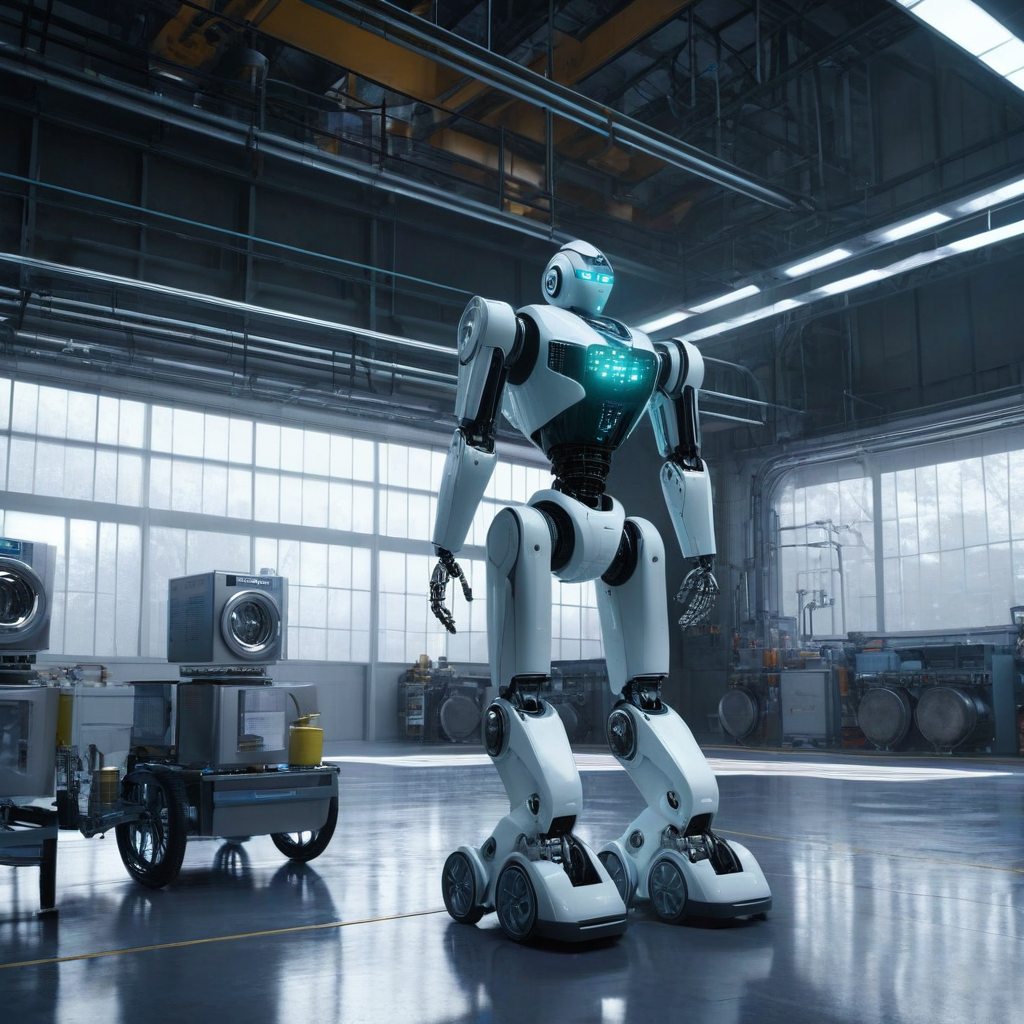
The centerpiece of the agreement is LG's plan to unveil a next-generation bipedal humanoid robot in the first quarter of 2027. The robot is being developed using NVIDIA Isaac GR00T, NVIDIA's open foundation model for humanoid reasoning and control, paired with the NVIDIA Jetson Thor onboard compute platform for real-time perception, decision-making, and motor control. LG has framed the humanoid program as a demonstration of how consumer electronics manufacturing expertise can translate into physical AI systems capable of operating in real-world environments.
Alongside the bipedal humanoid, LG plans to validate its existing CLOiD wheel-based service robots on a live production line at an LG Electronics washing machine manufacturing facility in Tennessee. That deployment is intended to test how physical AI robotics can be integrated into actual manufacturing workflows rather than controlled lab settings, giving LG operational data to refine both the robots and the surrounding automation systems.
Building Out AI Factory Infrastructure
Under the MOU, LG will construct AI factory reference sites built on NVIDIA's DSX platform and the upcoming NVIDIA Vera Rubin architecture. These reference sites are designed to give LG Group affiliates shared access to accelerated computing infrastructure for training, simulating, and validating AI models before they are deployed into products and services across the group's businesses, from consumer electronics to energy solutions.
The AI factory buildout builds on earlier collaboration announced in June 2026, when LG and NVIDIA agreed to jointly develop an LG Data Factory and advance LG Electronics' AI data center cooling and power delivery technologies. LG Uplus and LS Electric have also been working together on power infrastructure to support Vera Rubin-based data center deployments, reflecting how the partnership spans multiple LG affiliates rather than a single business unit.
Extending Into AI-Defined Vehicles
The agreement also covers mobility, with LG committing to develop a next-generation AI-defined vehicle platform built on NVIDIA DRIVE Hyperion. This extends NVIDIA's automotive computing platform into LG's vehicle components and infotainment businesses, positioning the two companies to jointly pursue opportunities in software-defined vehicles as automakers increasingly look to centralized compute architectures for advanced driver assistance and in-cabin AI features.
A Broader Pattern of Collaboration
The Santa Clara signing caps a rapid sequence of engagements between the two companies in 2026. LG Group first outlined its "M.A.P." framework, covering Mobility, AI Infrastructure, and Physical AI, with NVIDIA earlier in the year, then deepened ties through the June Seoul meeting between Koo and Huang and a subsequent 30-person LG delegation visit to NVIDIA's headquarters to scope commercialization priorities. Industry observers have noted that LG shares gained more than five percent following news of the expanding partnership, reflecting investor interest in how legacy manufacturers are positioning themselves within the physical AI ecosystem alongside chipmakers like NVIDIA.
For NVIDIA, the LG partnership fits a broader pattern of alliances with global industrial and electronics conglomerates seeking to apply accelerated computing to robotics, manufacturing, and vehicle software, extending the company's reach well beyond data center GPUs into the physical world.