Fractile Raises $720 Million to Advance AI Inference Chips
News Summary
Fractile, a London- and Bristol-based artificial intelligence chip startup, announced on November 11, 2026 (Greenwich Mean Time) that it had raised $720 million in a Series C round. The financing, led by Thrive Capital, Lightspeed, Redpoint and Founders Fund, is intended to speed development and delivery of specialized chips and systems for AI inference—the stage when trained models generate answers. Founder and chief executive Walter Goodwin said the company expects to ship its first chips and systems in 2027.
What the funding supports
The round gives Fractile substantial capital to move from chip design toward complete systems. Goodwin said the company plans to use the funding to move faster on shipping high-performance AI chips. Investors joining the four lead firms include CapitalG, Felicis, DST Global, BlackRock, Accel, Georgian, Bain Capital Ventures, SV Angel, the UK’s Sovereign AI fund, Balderton, Shopify Ventures, T. Rowe Price, the British Business Bank and other existing and new backers.
The UK government said its Sovereign AI Venture Fund and the British Business Bank participated in a financing round worth more than £500 million. The company’s investor Balderton described the Series C as being priced at a $7 billion post-money valuation. The scale of the round reflects investor interest in computing infrastructure that can handle the growing demand for AI services, while the reported valuation is not itself evidence of commercial performance.
Why inference needs specialized hardware
Training teaches a model patterns from data; inference is the repeated computation needed to apply that model to a user’s prompt. As models produce longer answers, handle multiple steps, or power agent-like workflows, each interaction can require more computation and data movement. That can make inference speed, energy use and operating cost important design goals for hardware providers.
Fractile is developing chips, software and systems together. Rather than focusing only on a processor, the company says it is taking a full-stack approach that includes a machine-learning compiler and system-level engineering. A compiler translates model operations into instructions a chip can execute. Coordinating those layers can help designers tune how models are mapped to hardware, although real-world results depend on the complete system and the workloads customers run.
The memory-design proposition
Goodwin said Fractile has achieved breakthroughs including work to extract 20 times higher speeds from DRAM memory. DRAM, or dynamic random-access memory, is widely used to hold data that processors need during computation. Moving data between memory and compute can consume time and energy, so improving memory access is one route researchers and chip designers explore to accelerate AI inference.
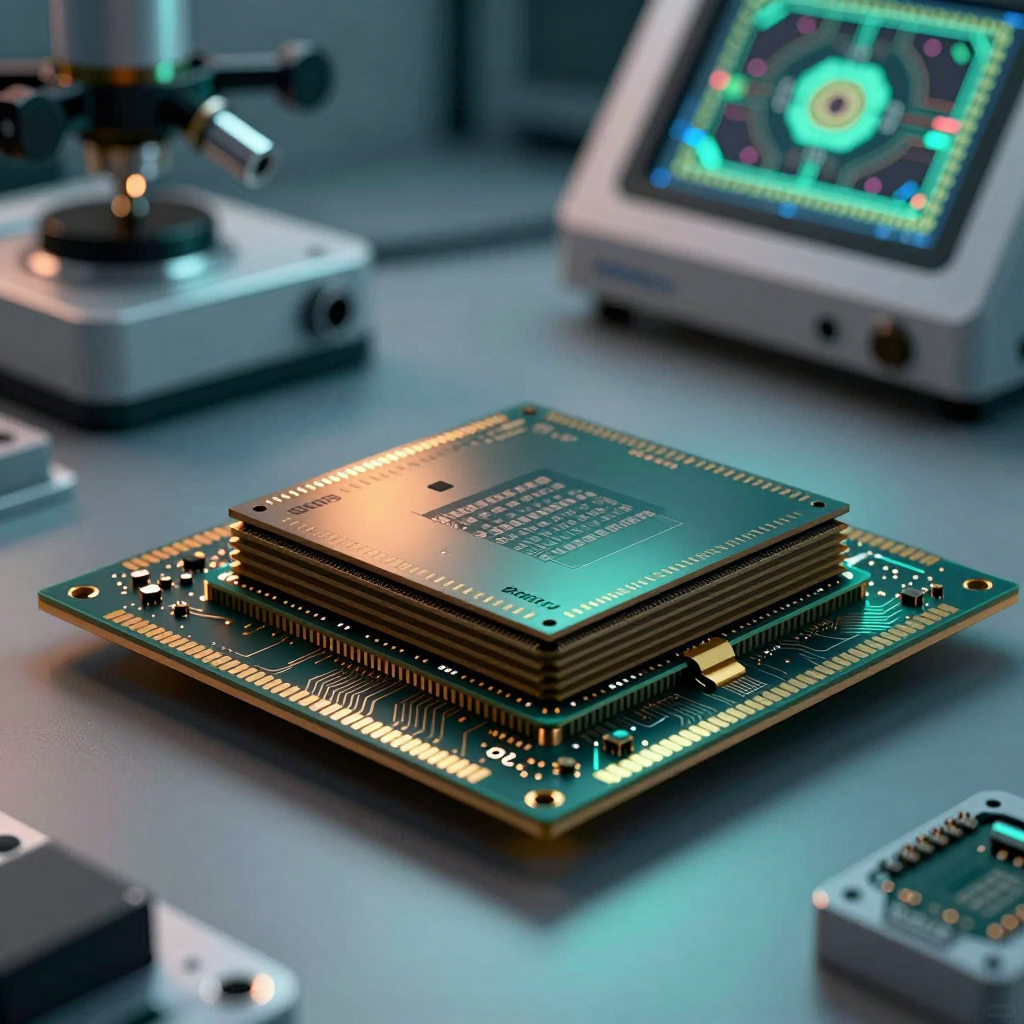
Fractile’s approach has evolved, with reporting describing a design that places DRAM stacked above each chip. The company’s speed figure is a stated technical result, not yet a broadly demonstrated measure of performance across commercial systems. Assessing the design will require details such as the comparison baseline, workload, capacity, power consumption, manufacturing yield and system-level benchmarks. The planned first shipments in 2027 should give customers and independent evaluators a clearer basis for comparison.
From research to usable systems
A chip’s performance depends on more than its architecture. Software support, memory capacity, interconnects, cooling, reliability and the ability to manufacture at volume all affect how useful an accelerator is in a data center. Fractile’s decision to develop silicon, software and systems together is intended to address those dependencies as one engineering program.
For students and technology readers, the company’s progress illustrates how computer architecture links to the user experience of AI. A model may seem to respond instantly, but its answer depends on processors repeatedly retrieving model data and carrying out calculations. Better locality between memory and compute can reduce delays, while compilers and systems software determine whether theoretical hardware capabilities are accessible to real applications.
What to watch next
The key milestones are tape-out and manufacturing progress, the arrival of the first chips and systems, and independently reproducible performance data. Useful comparisons will measure latency, throughput, energy per generated token and total operating cost on the same models and workloads. Results should also show how performance changes as model size, context length and concurrent users increase.
Fractile has raised capital to pursue those milestones, but its commercial position will ultimately depend on delivering reliable hardware and software that customers can deploy. The Series C therefore marks a major financing and development step; the planned 2027 shipments will be the next test of whether its memory and full-stack design can translate into practical gains for AI inference.
This article was compiled by the AIBARS editorial team with AI assistance. AI can make mistakes, so please check the original source for anything important. Spotted an error? Email [email protected].