Google’s Orbital TPU Sends Its First Gemma 4 Haiku Back to Earth
News Summary
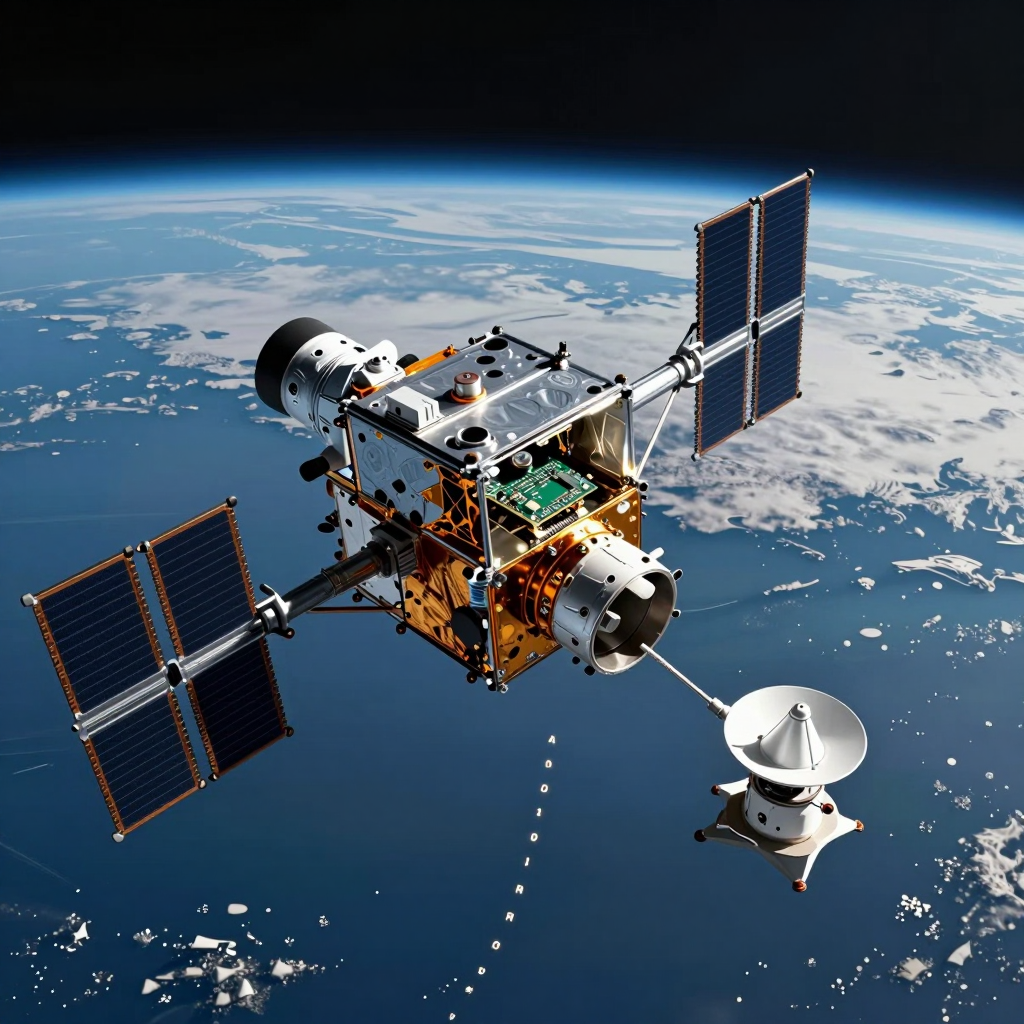
Google says its Project Suncatcher prototype has completed an end-to-end AI inference demonstration in orbit: a ground station sent a prompt to Gemma 4 running on an onboard data-center-class TPU, and the satellite returned the generated text during a pass over Svalbard, Norway. The company published the milestone on October 30, 2026 (Pacific Time; exact publication time not disclosed). It is a meaningful hardware and communications test, while questions about sustained performance, reliability, and economics remain open.
A prompt travels up, a poem comes back
Google described the test as the “Hello World” milestone for the prototype. During a ground-station contact window, the team uplinked a request asking its onboard Gemma 4 open model to write a haiku about space. As the satellite passed Svalbard, its response was downlinked to Earth:
Blue marble below
Data streams in silent grace
Starlight feeds my core.
The company said it subsequently tested space-themed limericks and prompts that asked the model to report payload telemetry. This sequence indicates that the demonstration involved more than a preloaded sample: the reported workflow sent a prompt to the spacecraft, ran inference onboard, and returned the output. Google did not publish latency, bandwidth, power consumption, or repeated-run reliability figures in this update.
What Project Suncatcher is testing
Project Suncatcher is Google's research effort to investigate whether solar-powered satellites equipped with Tensor Processing Units could eventually support machine-learning computing in space. Google announced the project in November 2025 as a long-term research program, not a commercial orbital data-center service. The prototype satellite, built in partnership with Planet, launched on the Transporter-18 rideshare mission on October 1, 2026 (Pacific Time; exact launch time not stated in Google's announcement).
The October 30 update says the team had completed commissioning checks, powered up the host system and TPU trays, and run early machine-learning tests before the first returned model response. The announcement does not claim that a full-scale AI data center is operating in orbit. It reports an initial inference result from a prototype payload.
The engineering questions ahead
Operating a computer in orbit presents challenges that differ from those in a terrestrial data center. Hardware must tolerate radiation and launch stresses, and engineers must manage heat without the familiar airflow used in Earth-based facilities. Google says its next tests will examine TPU performance under thermal stress and radiation exposure. The company has not yet shared detailed test measurements or long-duration reliability results in this announcement.
The broader concept also depends on reliable satellite-to-satellite links, ground connectivity, power systems, maintenance strategy, and launch and operating costs. A successful short prompt-and-response exchange establishes an important system milestone, but it does not by itself answer whether orbital computing can compete with or complement ground infrastructure at scale.
Why the result matters for science and technology
The test brings together several disciplines: machine-learning inference, accelerator hardware, satellite operations, radio communications, and spacecraft thermal and radiation engineering. It offers a concrete example for students of how an AI system is more than a model: useful output depends on the computing chip, software stack, power, communication links, and environmental protection working together.
Google says the next milestone is a pair of interconnected satellites planned for 2027. That future step would extend the experiment from a single spacecraft's onboard processing toward testing coordination between satellites. The central research question remains whether the hardware can perform reliably in orbit over time, and whether that capability can be scaled in a technically and economically practical way.
Source and timing
This report is based primarily on Google's Project Suncatcher update, published October 30, 2026 (Pacific Time; exact time not disclosed). The company's earlier launch update is dated October 1, 2026 (Pacific Time; exact time not disclosed). Dates are given in Pacific Time for consistency with Google's California-based publication context; the source posts provide dates but not clock times.
This article was compiled by the AIBARS editorial team with AI assistance. AI can make mistakes, so please check the original source for anything important. Spotted an error? Email [email protected].