Google Launches $899 Googlebook Laptops Built Around Gemini AI
News Summary
Google has opened pre-orders for a new family of laptops called Googlebook, with prices starting at $899 and running up to $1,299 for higher-end configurations. The announcement, first reported by TechCrunch on September 21, 2026, at approximately 6:00 AM Pacific Time, positions the devices as an AI-first alternative to Chromebooks, built specifically to showcase the latest capabilities of Google's Gemini assistant. U.S. sales begin October 4, 2026, with international availability in Canada, the United Kingdom, Ireland, France, Germany, and Australia following on October 5, 2026 (9:00 AM Eastern Time launch window, according to Google's retail partners).
What the Googlebook Actually Is
Despite the new branding, Googlebook devices run on Android OS paired with a desktop version of the Chrome browser, layered with familiar ChromeOS-style elements such as a taskbar, app launcher, and window management. Google is positioning this as a distinct category from both traditional Chromebooks and Windows laptops, built around the idea that Gemini should be woven into every part of the operating system rather than living inside a single app or browser tab.
Five initial models are being made available through launch partners Acer, ASUS, Dell, HP, and Lenovo. Hardware specifications vary by model but generally include:
- Displays up to 2.8K resolution OLED panels
- Intel or Qualcomm processors, several with dedicated neural processing units (NPUs) for on-device AI tasks
- Haptic glass trackpads and backlit keyboards
- Chassis materials including aluminum, magnesium alloy, and carbon fiber depending on tier
- Battery life rated up to 14 hours
- A commitment from Google to provide regular software updates for up to 10 years
The Gemini-First Software Layer
The centerpiece of the pitch is a set of Gemini-powered features designed to make AI assistance feel native to the operating system rather than bolted on:
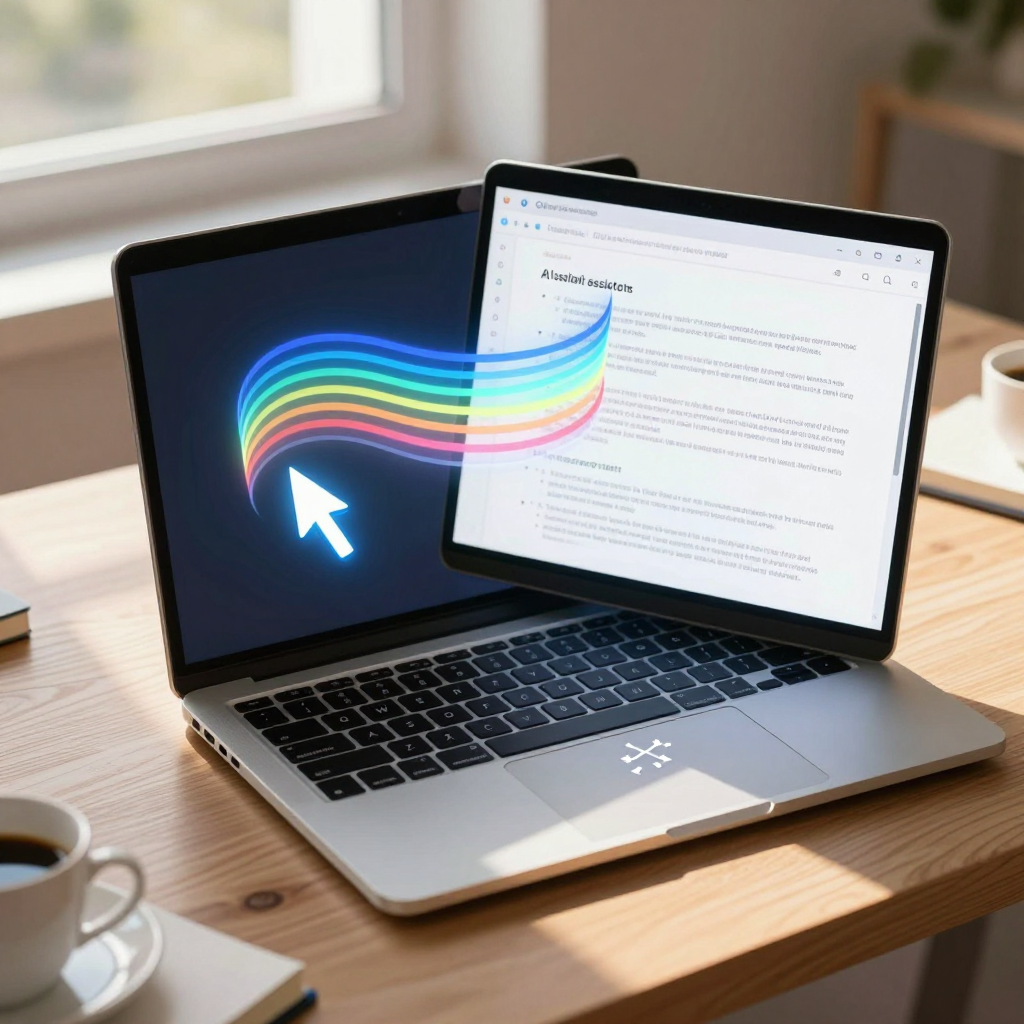
Magic Cursor (also referred to as Magic Pointer in some Google materials) lets users point at on-screen text or images and hand that content directly to Gemini for analysis, without copying and pasting into a separate chat window. Google demonstrated use cases including summarizing highlighted passages, flagging potentially unsafe emails, and visualizing or explaining images in real time.
Rambler is a dictation tool that takes unstructured spoken input, described by Google as "messy, rambling brain dumps," and converts it into organized, readable text.
The laptops also support Gemini Spark for generating small, so-called "vibe-coded" widgets on the fly, along with Gemini Live for real-time conversational AI sessions. Every Googlebook ships with 12 months of Google AI Pro included, a subscription bundle that normally includes 5TB of cloud storage, Gemini Advanced access, and trial periods for YouTube Premium and Adobe Photoshop.
The Strategic Bet
Industry coverage of the launch, including analysis from TechCrunch, frames the Googlebook line as a wager that consumers and institutions will replace still-functional laptops specifically to get deeper Gemini integration, rather than because of any hardware necessity. Google's Chromebook installed base is enormous, with tens of millions of units in schools across the United States alone, and observers see the K-12 and education market as an early proving ground where Google hopes to migrate existing Chromebook users toward Gemini-native hardware over the next several device refresh cycles.
Some early commentary has questioned how differentiated features like Magic Cursor are from existing Android capabilities such as Circle to Search, and whether a point-and-ask interaction model will still feel compelling as AI agents capable of completing multi-step tasks autonomously become more common. The broader question raised by reviewers is whether Gemini integration alone, without a more fundamental hardware shift, is enough to drive a large-scale upgrade cycle.
Pricing and Availability Details
The entry-level $899 configuration includes the bundled 12-month Google AI Pro subscription, while higher-tier models with upgraded displays, processors, and materials scale up to $1,299. Pre-orders are live now through the Google Store, Best Buy, and other authorized retailers ahead of the October 4, 2026 U.S. launch date. Reuters also reported on the pre-order opening, corroborating the pricing structure and the October international rollout timeline across Canada, the UK, Ireland, France, Germany, and Australia.