Nvidia Agrees to Buy Hugging Face for $12.9 Billion
News Summary
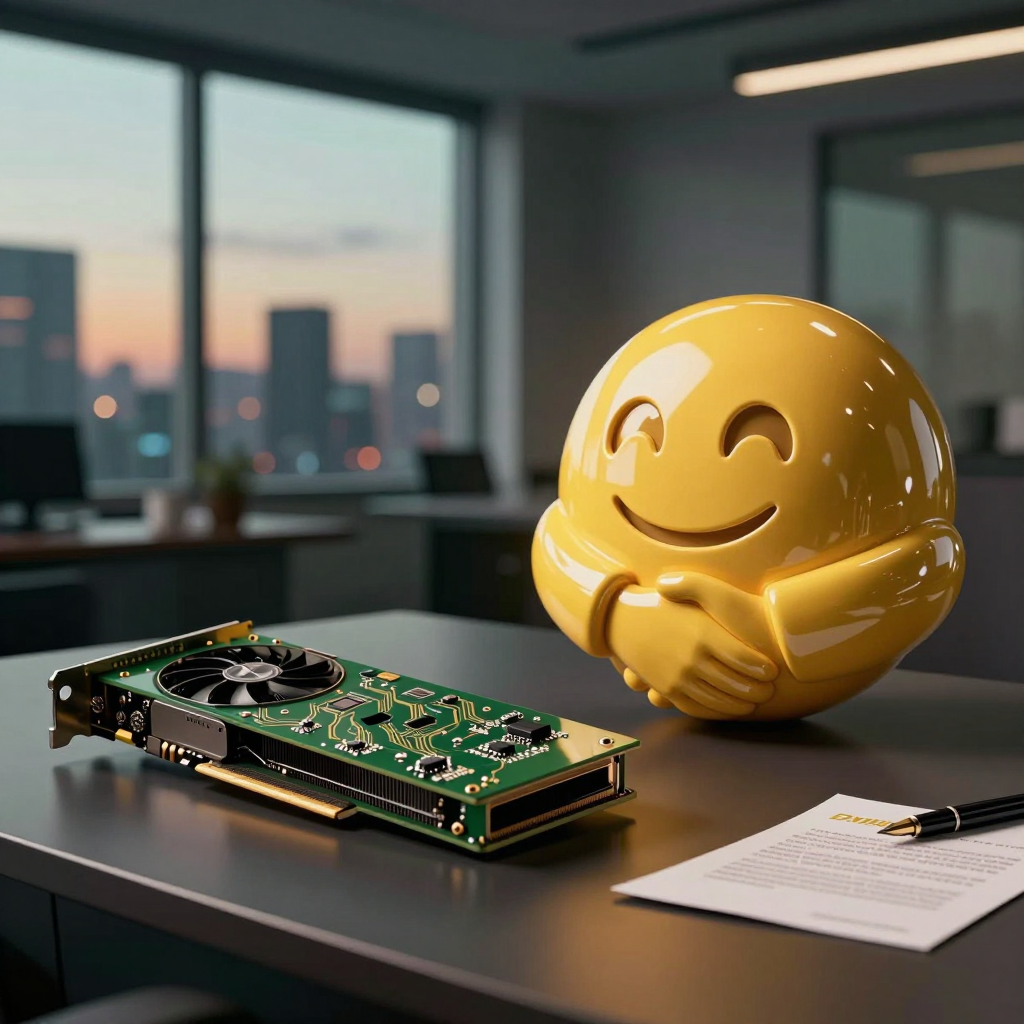
Nvidia has agreed to acquire Hugging Face, the widely used repository for open-source AI models and datasets often described as "the GitHub of AI," in a deal valued at approximately $12.9 billion. The agreement was first reported on Wednesday, August 26, 2026 (Eastern Time) by The Information, which cited a person familiar with the matter, and the news quickly spread across major outlets including Bloomberg, Business Standard, and TechStartups. The transaction, if finalized, would rank among Nvidia's largest acquisitions to date and marks a significant escalation of the chipmaker's push deeper into the software and developer-tooling layer of the AI stack.
From a Rejected Offer to a $12.9 Billion Deal
The scale of the agreed price stands out against Hugging Face's recent valuation history. Just a year earlier, Hugging Face turned down a roughly $500 million investment offer from Nvidia that would have valued the startup at about $7 billion. Nvidia had previously participated as an investor in Hugging Face's $235 million funding round in August 2023, a round that also included backing from Salesforce and Google, and which valued the company at $4.5 billion at the time.
The reported $12.9 billion price tag therefore represents nearly a threefold increase over that 2023 valuation in the span of about three years, reflecting how quickly demand for open-source AI infrastructure has grown. Reports also noted that talks accelerated only in the past several weeks: Business Insider reported just two days before the announcement that Hugging Face was exploring a potential sale at a valuation of $13 billion or more, with preliminary conversations already underway.
What Hugging Face Brings to Nvidia
Hugging Face has become one of the most important hubs in the open-source AI ecosystem, hosting hundreds of thousands of pretrained models, datasets, and libraries such as Transformers and Diffusers that developers and researchers around the world rely on to build, fine-tune, and share machine learning systems. Its platform plays a role for the AI community that is often compared to what GitHub represents for software developers more broadly.
For Nvidia, acquiring Hugging Face would extend its reach beyond hardware and into the software layer where developers actually discover, download, and deploy AI models — many of which are already optimized to run on Nvidia's graphics processing units (GPUs). Analysts covering the deal noted that this move comes at a moment when several developers of large, closed-source models are exploring their own custom chip efforts as potential alternatives to relying solely on Nvidia hardware, making a stronger foothold in the open-source developer community strategically valuable.
Deal Status and What Comes Next
As of the initial reports, the transaction was described as agreed upon but still being finalized, with some outlets cautioning that details on deal structure, timing, and closing conditions had not yet been disclosed. Bloomberg's coverage noted that the two companies had been in serious discussions for several weeks prior to the announcement, though it also flagged that agreements at this stage can still change before a deal is formally signed and closed.
Neither Nvidia nor Hugging Face had issued an official joint statement confirming full deal terms at the time of the initial reporting. Industry observers will be watching closely for regulatory review given the size of the transaction and Nvidia's already dominant position in AI computing hardware, as well as for details on how Hugging Face's platform, team, and open-source commitments might be preserved or integrated following the acquisition.
Why It Matters for the Broader AI Ecosystem
If completed, the deal would illustrate how central open-source infrastructure has become to the competitive dynamics of the AI industry, and how major hardware providers are increasingly looking to secure influence over the software distribution layer as well. For the global community of AI researchers, students, and developers who rely on Hugging Face's free and open tools daily, the acquisition raises questions — and opportunities — about how the platform's mission of open collaboration will evolve under new ownership, and how continued investment from a company at the center of the AI computing boom could accelerate access to new models and tools worldwide.