AMD Bets on Chips That Can Only Run One AI Model — By Design
News Summary
Advanced Micro Devices announced on August 6, 2026 (Eastern Time) that it has reached a definitive agreement to acquire Taalas, a Toronto-based AI inference chip startup known for permanently etching AI model weights directly into silicon. The deal gives AMD a fundamentally different approach to AI inference hardware to sit alongside its existing GPU and CPU lineups, and it deepens the company's push to compete for data center AI workloads. Financial terms of the transaction were not disclosed, and the acquisition remains subject to customary regulatory approvals, with AMD expecting the deal to close in the fourth quarter of 2026.
What Taalas Builds
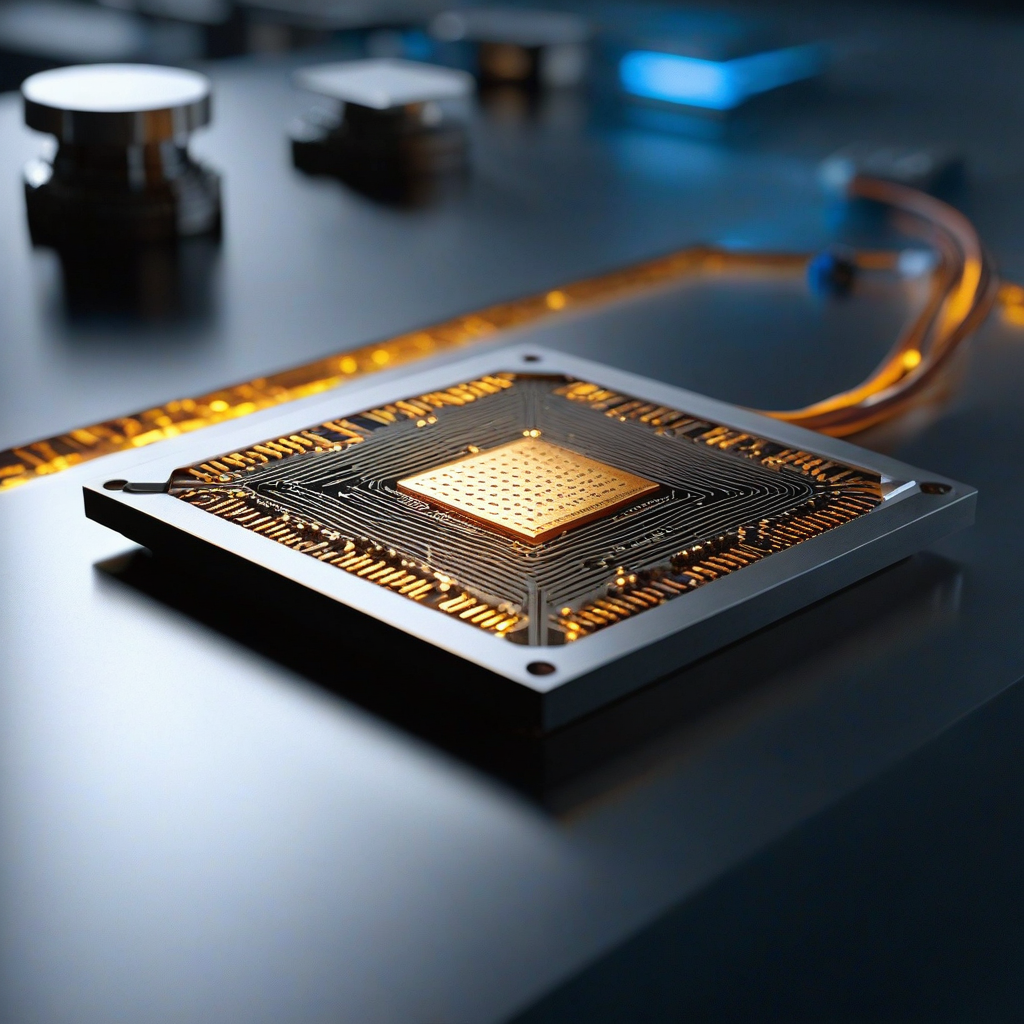
Founded in 2023 by Ljubisa Bajic, a chip engineer with prior experience at AMD and NVIDIA who also co-founded AI hardware company Tenstorrent, Taalas has raised roughly $219 million in venture funding to pursue a radically different chip design philosophy. Rather than building general-purpose, programmable accelerators like conventional GPUs, Taalas "hardwires" a specific AI model's weights directly into the physical layout of a chip during manufacturing. The company says this approach, most recently demonstrated with its HC1 chip built on a 6-nanometer process, can deliver inference throughput of roughly 17,000 tokens per second on targeted models — a substantial speed advantage over general-purpose GPUs running the same workload, though the resulting chip can only ever run the one model it was designed for.
From Model Weights to Silicon in Weeks
The core of Taalas's technology is a compiler-like system that converts a trained model's weights into a finished chip design in about a week, compressing the traditional "weights to silicon" turnaround down to roughly two months including fabrication. Because the model's parameters are fixed into the hardware itself rather than stored in external memory and fetched during computation, the design can eliminate much of the memory-bandwidth bottleneck that limits inference speed on conventional accelerators. The tradeoff is flexibility: a hardwired chip cannot be updated or repurposed for a different model the way a software-programmable GPU can, making the approach best suited for stable, high-volume, latency-sensitive inference workloads rather than general experimentation or model development.
How Taalas Fits Into AMD's Roadmap
AMD said it plans to integrate Taalas's hardwiring technology across its data center portfolio, including its Instinct GPU accelerators, EPYC server processors, and Helios rack-scale AI systems, as well as its open ROCm software stack. The move gives AMD a specialized option for customers running extremely high-volume, well-established inference workloads where a purpose-built chip could outperform a general-purpose accelerator on both speed and energy efficiency, complementing rather than replacing AMD's existing GPU business.
Why the Deal Matters
The acquisition reflects a broader shift in the AI hardware market, where inference — running trained models to serve users — has grown to rival or exceed model training as a driver of data center chip demand. As inference workloads scale, chipmakers are increasingly exploring specialized silicon that trades general-purpose flexibility for raw efficiency on specific, high-volume tasks. Industry analysts note that by acquiring rather than partnering with Taalas, AMD gains direct control over a novel inference architecture at a time when competition for AI data center infrastructure spending remains intense across the semiconductor industry. For researchers and engineers, the deal is also a notable example of how AI-specific chip design techniques, including automated compilation from trained weights to physical silicon layouts, are maturing quickly enough to attract acquisition interest from major established chipmakers.