Google Stitch Reborn: How One Free AI Tool Wiped $2 Billion Off Figma's Market Cap Overnight
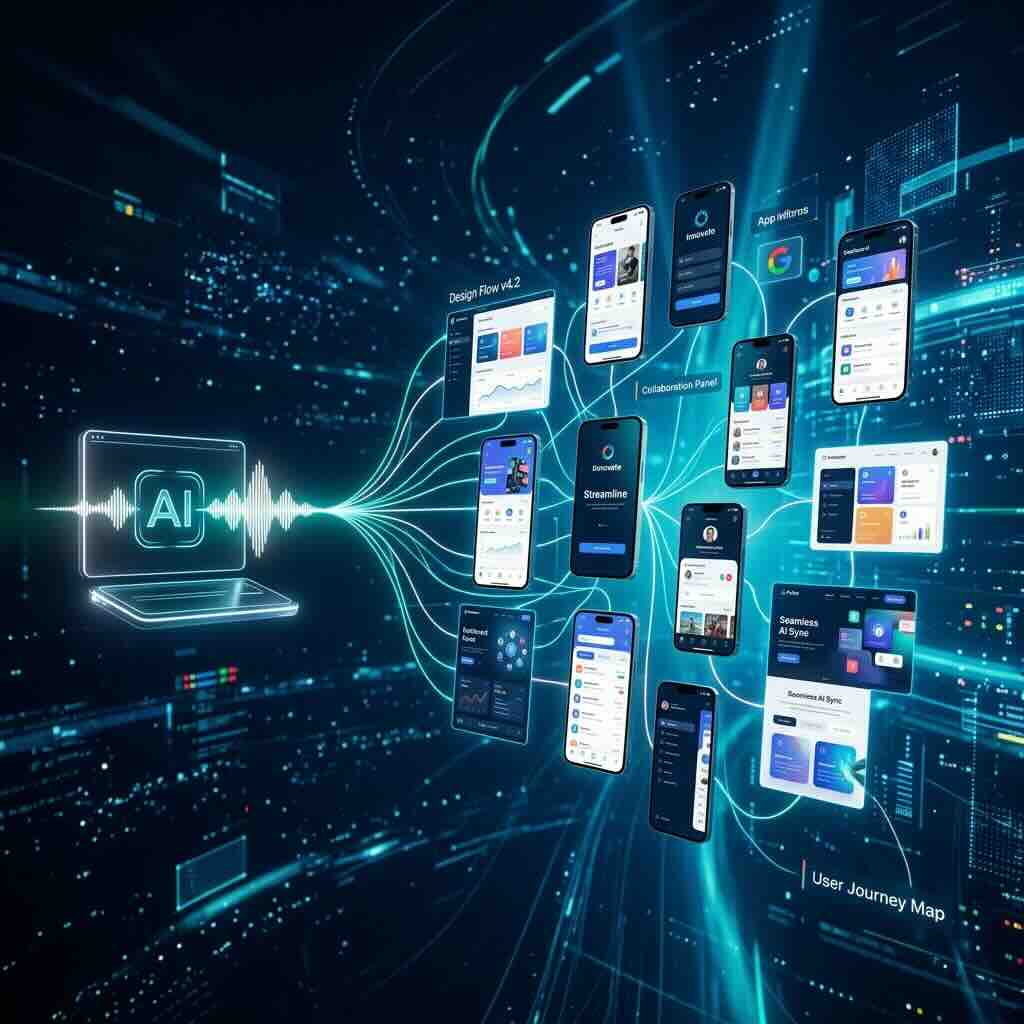
News Summary
Google Labs officially unveiled a major overhaul of its Stitch platform on Tuesday, March 18, 2026 (Eastern Time), transforming what was once a basic text-to-UI experiment into a full-scale AI-native software design canvas. The announcement was made by Rustin Banks, Product Manager at Google Labs, and immediately reverberated across the tech and design communities.
What Is Stitch?
Originally launched at Google I/O 2025 as a simple screen generator, Stitch has since evolved into a comprehensive design tool powered by Google's Gemini AI models. The platform allows designers, developers, and non-technical founders alike to generate high-fidelity user interfaces from nothing more than a natural language description, a sketch, or even a voice command — all without writing a single line of code.
Five Major Features Introduced in the March 2026 Update
The March 2026 update is described as the most significant upgrade to Stitch since its launch. Google completely redesigned the interface around an AI-native infinite canvas — a workspace where multiple screens, images, and code can coexist and be reasoned over simultaneously.
The first headline feature is Voice Canvas, currently available in preview. Users can now speak directly to the canvas — asking for design critiques, requesting variations, or navigating between screens — while the AI agent processes multiple commands concurrently. The second is the redesigned AI Design Agent, which now understands the full context of the entire canvas rather than a single screen at a time, enabling more coherent and consistent design generation across a project.
Third, Stitch now supports Instant Prototyping. By clicking "Play," users can instantly transform static screens into interactive, clickable prototypes. The system automatically generates logical next screens based on where the user clicks, mapping complete user journeys without any manual work. Fourth, the new Agent Manager enables parallel design exploration, allowing teams to pursue multiple creative directions simultaneously.
Finally, Google introduced DESIGN.md — an agent-friendly Markdown file format that exports and imports design system rules between tools such as Figma, Google AI Studio, and Antigravity. This ensures design consistency across projects and hand-offs.
Free Tier and Usage Limits
Stitch remains completely free to use during its beta phase. The current monthly limits are 350 standard generations and 200 pro generations. Google has not announced any paid tier pricing yet, though analysts speculate that plans in the $25–$30/month range could emerge once the product exits Google Labs.
Market Impact: Figma Takes a Hit
The announcement sent immediate shockwaves through the stock market. Figma, which went public in July 2025, saw its stock fall approximately 12% over two days following the Stitch update, erasing roughly $2 billion in market value. Figma's shares are now down approximately 35% year-to-date, reflecting broader investor anxiety over AI-driven disruption of design and software tooling. Notably, Google and Figma had only expanded their partnership in October 2025, with Google's Gemini AI being integrated directly into Figma's platform.
Industry Perspective
Google's entry into the AI-powered UI design space intensifies competition against tools like v0 by Vercel, Lovable, and UX Pilot. However, analysts note that Stitch occupies a distinct niche as a design-first tool rather than a code-first app builder. Its greatest strength is the speed of early-stage exploration — going from a vague idea to a clickable multi-screen prototype in minutes rather than days. Its current limitations include a lack of backend logic, full interactivity, and the depth of collaboration features found in Figma.
The practical workflow emerging in the industry for 2026 is: explore in Stitch, refine in Figma, and build in tools like Antigravity or Google Jules. Google's deep ecosystem ties and willingness to offer the tool for free make it a formidable force as the design industry continues its AI-driven transformation.